
Myanmar Travel Guide မြန်မာ
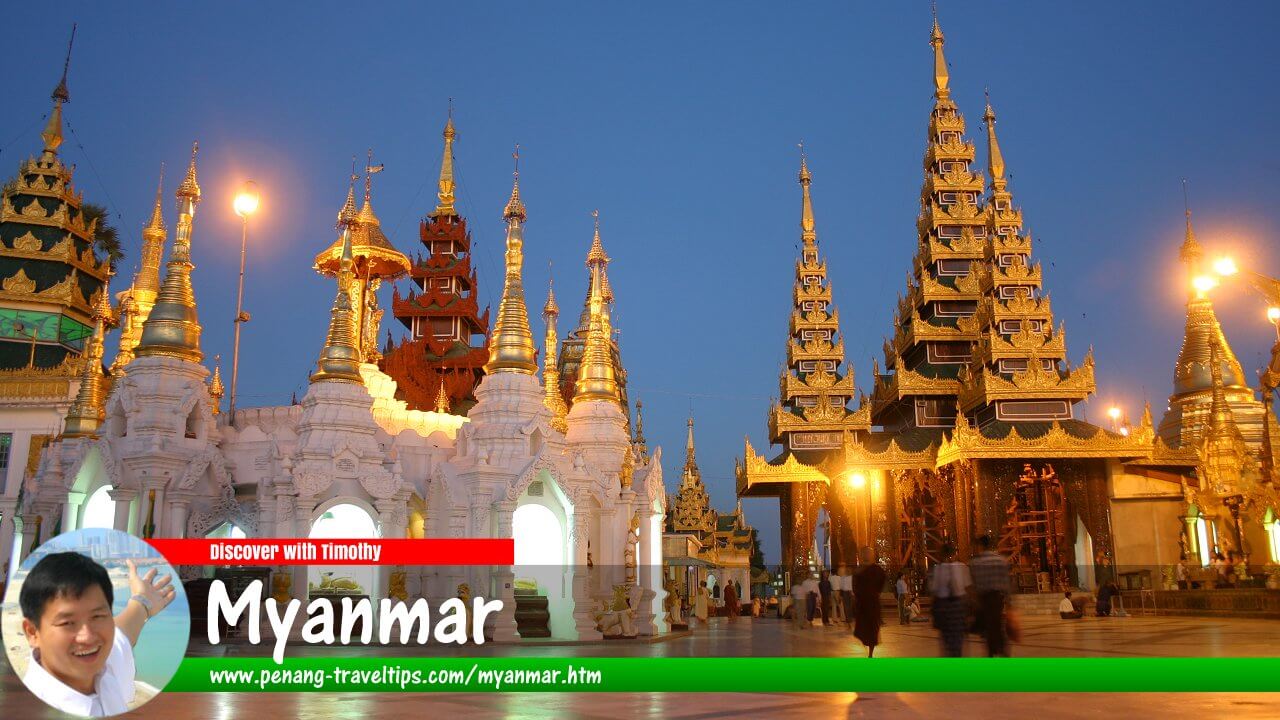 Myanmar (20 November 2003)
Also available: Panduan Melawat Myanmar
Last updated: July 2026
Myanmar is a country in Southeast Asia known for its ancient cities, diverse ethnic communities, scenic landscapes and rich cultural heritage. Located between South Asia and Southeast Asia, Myanmar occupies a strategic position bordered by India, Bangladesh, China, Laos and Thailand, with a coastline facing the Bay of Bengal and the Andaman Sea.1 From the former royal capitals of Amarapura, Mandalay and Sagaing, to the ancient temple city of Bagan, Myanmar offers visitors a glimpse into centuries of history, traditions and artistic achievements.
The country is home to the mighty Ayeyarwady River, the fertile plains of central Myanmar, forested mountains in the north and east, and scenic destinations such as Inle Lake. Its cultural landscape reflects the influences of Buddhism, indigenous traditions and the many ethnic communities that have shaped Myanmar over generations.1
Quick Facts
- Official name: Republic of the Union of Myanmar
- Capital: Nay Pyi Taw
- Largest city: Yangon
- Location: Mainland Southeast Asia
- Area: Approximately 676,578 square kilometres2
- Bordering countries: Bangladesh, India, China, Laos and Thailand1
- Coastline: Bay of Bengal and Andaman Sea1
- Main river: Ayeyarwady (Irrawaddy) River
- Currency: Myanmar Kyat (MMK)
- Official language: Myanmar (Burmese)
- Population: More than 50 million people (estimate varies according to source and methodology)
- Religion: Buddhism is the predominant religion, with significant Christian, Muslim, Hindu and indigenous belief communities1
- Time zone: Myanmar Standard Time (UTC+6:30)
- Major international gateways: Yangon International Airport, Mandalay International Airport and Nay Pyi Taw International Airport1
Geography
Myanmar is the largest country in mainland Southeast Asia, covering an area of approximately 676,578 square kilometres. It occupies a strategic location between South Asia and Southeast Asia, with India and Bangladesh to the west, China to the north and northeast, Laos and Thailand to the east, and the Bay of Bengal and Andaman Sea to the south and southwest.2
The geography of Myanmar is highly diverse, consisting of mountains, river valleys, plains, forests and coastal areas. The country can broadly be divided into several geographical regions: the mountainous border areas, the central dry zone, the eastern highlands, the Ayeyarwady River basin and the coastal regions along the Bay of Bengal and Andaman Sea.4
Mountains and Highlands
The northern and eastern parts of Myanmar are dominated by mountain ranges that form natural boundaries with neighbouring countries. The northern mountains extend from the eastern Himalayas, with Hkakabo Razi in Kachin State recognised as the highest peak in Myanmar, rising to approximately 5,881 metres above sea level.4
The Shan Plateau in eastern Myanmar is a highland region known for its scenic landscapes, cooler climate and ethnic diversity. The hill town of Kalaw and the famous Inle Lake are located in this region, which has become one of Myanmar's most popular areas for nature, cultural and trekking experiences.
The Ayeyarwady River Basin
The Ayeyarwady River is Myanmar's most important river and has played a central role in the country's history, economy and settlement patterns. Rising from the confluence of rivers in northern Myanmar, the Ayeyarwady flows southwards through the heart of the country before emptying into the Andaman Sea through a large delta region.4
The fertile plains along the Ayeyarwady River supported the development of several historic kingdoms, including the Pagan Kingdom, whose capital at Bagan became one of Southeast Asia's greatest centres of Buddhist architecture and learning.
The Central Dry Zone
Central Myanmar, located mainly around the Ayeyarwady basin, is known as the Dry Zone because it receives significantly less rainfall than other parts of the country. This region includes important historic areas such as Bagan and Mandalay, and has traditionally been a centre of agriculture, especially the cultivation of crops such as sesame, pulses and grains.
Coastal Regions
Myanmar has a coastline extending along the Bay of Bengal and the Andaman Sea. The coastal areas include the Rakhine coast in the west, the Ayeyarwady Delta in the south and the long coastline of Tanintharyi Region in the southeast. These areas are characterised by beaches, mangrove forests, islands and important marine ecosystems.4
Climate
Myanmar has a tropical monsoon climate, with three main seasons: the hot season, the rainy season and the cool season. However, climatic conditions vary considerably because of the country's size and diverse terrain.3
- Cool season (November to February): Generally the most comfortable period for visiting many parts of Myanmar, with lower temperatures and less rainfall.
- Hot season (March to May): Temperatures rise significantly, particularly in the central plains around Bagan and Mandalay.
- Rainy season (June to October): The southwest monsoon brings rainfall to much of the country, although the amount varies between regions.
The best time to visit depends on the destination. The cooler months are generally suitable for exploring cultural sites such as Yangon, Bagan and Mandalay, while highland destinations such as Kalaw and areas around Inle Lake offer a more temperate climate throughout much of the year.
Natural Landscapes
Myanmar's varied geography has created a wide range of natural landscapes, from snow-capped mountains in the north to tropical islands in the south. Visitors can experience ancient temples, river landscapes, mountain scenery, lakes, caves and coastal environments within the same country.
Among Myanmar's notable natural and cultural landscapes are the waters of Inle Lake, the limestone formations of the Pindaya Caves, the volcanic peak of Mount Popa and the sacred monastery of Popa Taungkalat.
History
Myanmar has a long and complex history shaped by successive kingdoms, migrations, religious developments, foreign influences and interactions among diverse ethnic communities. The country's history reflects the rise and fall of powerful dynasties, the spread of Buddhism, colonial rule under the British Empire, independence in the 20th century and the political changes that have continued into the modern era.6
Early Civilisations and Ancient Kingdoms
The earliest known inhabitants of the region included the Pyu, Mon and other indigenous communities that established settlements and trading networks across what is now Myanmar. The Pyu city-states, which flourished between approximately the 2nd century BCE and the 9th century CE, were among the earliest urban civilisations in Southeast Asia and were strongly influenced by Indian culture, Buddhism and international trade.6
The Mon people also played an important role in early Myanmar history, particularly in Lower Myanmar, where Mon kingdoms became centres of commerce, literature and Theravada Buddhist culture. These early societies laid the foundations for later Burmese kingdoms that would unite much of the region.
The Pagan Kingdom
The Pagan Kingdom, also known as the Bagan Kingdom, emerged in the 9th century and became the first major kingdom to unify large parts of present-day Myanmar. At its height between the 11th and 13th centuries, Pagan was a powerful political and religious centre under kings who promoted the spread of Theravada Buddhism and supported the construction of thousands of temples, pagodas and monasteries.6
The architectural legacy of this period remains one of Myanmar's greatest cultural achievements. The Bagan Archaeological Zone contains thousands of surviving monuments that demonstrate the artistic, engineering and religious achievements of the Pagan period. It was inscribed as a UNESCO World Heritage Site in 2019.7
Successive Burmese Kingdoms
After the decline of Pagan in the 13th century, Myanmar was divided among several competing kingdoms and regional powers. Over the following centuries, various dynasties rose to prominence, including the Ava Kingdom, Hanthawaddy Kingdom, Toungoo Dynasty and Konbaung Dynasty.
The Toungoo Dynasty in the 16th century created one of the largest empires in Southeast Asian history, extending Burmese influence over much of mainland Southeast Asia. Later, the Konbaung Dynasty became the last ruling dynasty of Myanmar before the country was incorporated into the British Empire in the 19th century.6
The Konbaung Dynasty and the British Colonial Period
The Konbaung Dynasty, founded in 1752, restored Burmese power after a period of political fragmentation. During this period, royal capitals shifted between several locations, reflecting the importance of central Myanmar as the heartland of Burmese political power.
Relations between the Konbaung rulers and the expanding British Empire deteriorated during the 19th century. Following three Anglo-Burmese Wars between 1824 and 1885, Myanmar was gradually annexed by Britain and incorporated into British India before becoming a separate colony in 1937.6
British rule brought major economic and social changes, including the expansion of trade, infrastructure and migration. At the same time, it also contributed to nationalist movements that sought greater political independence.
Independence and the Modern Nation
Myanmar regained independence from Britain on 4 January 1948, becoming an independent republic known initially as the Union of Burma. The early years of independence were marked by efforts to build a democratic state while managing complex relationships among the country's many ethnic groups.8
Following political changes in the decades after independence, Myanmar experienced periods of military rule, economic isolation and gradual reforms. The country officially adopted the name Republic of the Union of Myanmar in 1989, replacing the former name Union of Burma.8
Myanmar in the 21st Century
Myanmar entered the 21st century with political and economic reforms that opened the country to increased international engagement and tourism. The transition period led to greater foreign investment, improved connectivity and increased interest from visitors seeking to explore Myanmar's cultural heritage and landscapes.
Since 2021, Myanmar has experienced significant political and security challenges. Conditions vary considerably between regions, and travellers should consult current official travel advisories and local information before planning visits to specific areas.
Administrative Divisions
Myanmar is a unitary republic divided into administrative units that reflect both geographical regions and ethnic diversity. The country is divided into seven regions (formerly known as divisions), seven states, one Union Territory, five self-administered zones and one self-administered division.9
The seven regions are generally located in the central lowland areas, where the majority of the Bamar population lives, while the seven states are largely associated with ethnic minority populations in the mountainous and border areas. The distinction between regions and states reflects Myanmar's historical ethnic and geographical composition.
The administrative divisions of Myanmar are:
- Regions: Ayeyarwady, Bago, Magway, Mandalay, Sagaing, Tanintharyi and Yangon
- States: Chin, Kachin, Kayah, Kayin, Mon, Rakhine and Shan
- Union Territory: Nay Pyi Taw
Nay Pyi Taw, located in central Myanmar, became the country's administrative capital in 2005, replacing Yangon as the seat of government. Yangon remains Myanmar's largest city and its main commercial centre.
People and Culture
Myanmar is a culturally diverse country with a population comprising many ethnic communities. The largest ethnic group is the Bamar, who form the majority of the population and have historically played a central role in Myanmar's political and cultural development. Other major ethnic communities include the Shan, Karen, Rakhine, Mon, Chin, Kachin and Kayah peoples.10
The diversity of Myanmar's population is reflected in its traditional clothing, music, festivals, cuisine, handicrafts and local customs. Each ethnic community has its own languages, cultural practices and historical traditions, contributing to the country's rich cultural landscape.
Traditional arts remain an important part of Myanmar's cultural identity. These include lacquerware, weaving, wood carving, jewellery making, puppetry and religious art. Many crafts continue to be produced using techniques passed down through generations.
Religion and Beliefs
Theravada Buddhism has played a central role in Myanmar's history and society for centuries. Buddhist monasteries, pagodas and religious festivals are deeply connected with community life, education and cultural traditions.10
In addition to Buddhism, Myanmar is home to Christian, Muslim, Hindu and indigenous belief communities. Religious traditions vary between regions and ethnic groups, reflecting the country's diverse historical influences.
Visitors to Myanmar will encounter many religious sites, including temples, monasteries, shrines and sacred landscapes. Travellers are generally expected to observe local customs when visiting religious places, such as dressing respectfully, removing footwear where required and behaving appropriately within sacred areas.
Languages
The official language of Myanmar is Myanmar language, commonly known as Burmese. It is spoken as a first language by the Bamar majority and serves as the main language of government, education and national communication.11
Myanmar is also home to many ethnic languages, including Shan, Karen, Rakhine, Mon, Chin, Kachin and Kayah languages. In some regions, these languages remain important markers of local identity and cultural heritage.
English is used in some tourism-related settings, particularly in hotels, major attractions and businesses that frequently serve international visitors. However, outside major tourist areas, knowledge of English may be limited, and learning a few basic Burmese phrases can enhance interactions with local communities.
Major Cities
Myanmar's cities reflect the country's long history, cultural diversity and changing political landscape. While Nay Pyi Taw serves as the administrative capital, Yangon remains the largest city and the country's main commercial centre. Other cities, including Mandalay and the historic capitals of central Myanmar, preserve important links to the country's royal, religious and cultural heritage.12
Yangon
Yangon is Myanmar's largest city and its principal economic hub. Located in the southern part of the country near the Yangon River and the Gulf of Martaban, the city served as the national capital until the establishment of Nay Pyi Taw in 2005.
The city is known for its colonial-era architecture, bustling markets, diverse neighbourhoods and religious landmarks. Its most famous landmark is the Shwedagon Pagoda, one of the most important Buddhist sites in Myanmar and a major destination for visitors.
Mandalay
Mandalay is Myanmar's second-largest city and an important cultural centre. Founded in 1857 by King Mindon of the Konbaung Dynasty, it was the last royal capital of Myanmar before the country came under British rule.12
The city remains closely associated with traditional Burmese arts, Buddhism, crafts and historical sites. Its location near the Ayeyarwady River has also made it an important centre for trade and transport in central Myanmar.
Nay Pyi Taw
Nay Pyi Taw became Myanmar's administrative capital in 2005. Unlike older cities that developed organically over centuries, it was purpose-built as a government centre with broad roads, government complexes and planned urban zones.
The city has a different character from Myanmar's historic urban centres, with large open spaces and modern administrative infrastructure.
Bagan
Bagan is one of Myanmar's most important historical destinations and one of Southeast Asia's greatest archaeological landscapes. The former capital of the Pagan Kingdom flourished between the 11th and 13th centuries, when thousands of Buddhist monuments were constructed across the surrounding plains.
Although Bagan is not a major modern city in terms of population, its historical significance makes it one of Myanmar's most visited destinations. The archaeological zone was designated a UNESCO World Heritage Site in 2019.7
Amarapura, Mingun and Sagaing
The areas around Mandalay contain several former royal and religious centres that played important roles in Myanmar's history. Amarapura served as a royal capital during the Konbaung Dynasty and is known for its monasteries and traditional crafts.
Sagaing became a centre of Buddhist learning and remains known for its many monasteries and hilltop pagodas. Mingun, located along the Ayeyarwady River, is associated with the monumental Mingun Pahtodawgyi and other historic structures.
Bago
Bago, also known historically as Pegu, was an important Mon kingdom centre and later became one of Lower Myanmar's significant cities. Located northeast of Yangon, it is known for its Buddhist heritage, historic pagodas and cultural significance.
Kalaw
Kalaw is a hill town in Shan State known for its cooler climate, scenic surroundings and cultural diversity. During the colonial period, it developed as a hill station and today serves as a base for visitors interested in trekking and exploring rural landscapes.
Other Important Urban Centres
Beyond the cities covered in detail on Penang Travel Tips, Myanmar has many other significant urban areas, including Mawlamyine, Pathein, Myeik, Taunggyi and Sittwe. Each reflects the geography, history and ethnic character of its surrounding region.
Mawlamyine, for example, is an important city in Mon State with a strong colonial heritage, while Taunggyi serves as a gateway to the Shan highlands. Coastal cities such as Myeik are connected with maritime trade and island destinations.
Tourism and Places of Interest
Myanmar offers visitors a wide range of experiences, from ancient cities and religious monuments to scenic landscapes, traditional communities and cultural heritage sites. The country's attractions reflect its long history, diverse ethnic traditions and varied geography, ranging from the mountains of the north and east to the river valleys and coastal regions.15
Many visitors are drawn to Myanmar because of its historic Buddhist architecture, particularly the ancient temples of Bagan, the royal heritage of Mandalay and the thousands of pagodas and monasteries found throughout the country. Beyond its cultural sites, Myanmar also offers opportunities for nature tourism, trekking, river journeys, lake experiences and exploration of traditional villages.
Ancient Cities and Cultural Heritage
Myanmar's ancient cities provide insight into the development of Burmese civilisation over many centuries. The monuments of Bagan represent one of the greatest achievements of Buddhist architecture in Southeast Asia, while former royal centres around Mandalay preserve important connections to Myanmar's dynastic history.
Historic destinations such as Amarapura, Mingun, Sagaing and Bago demonstrate different aspects of Myanmar's royal, religious and artistic traditions. Together, these places form an important part of the country's cultural identity.
Religious Sites
Buddhist heritage is one of the defining features of Myanmar tourism. The country is known for its golden pagodas, monasteries, pilgrimage sites and religious festivals. Among the best-known sacred destinations are the Shwedagon Pagoda in Yangon, the hilltop sanctuary of Kyaiktiyo (Golden Rock), and numerous monasteries and pagodas throughout the country.
Visitors to religious sites are expected to observe local customs, including dressing respectfully and following rules regarding footwear, photography and access to sacred areas.
Rivers, Lakes and Natural Landscapes
Myanmar's natural landscapes provide opportunities for travellers interested in scenery, wildlife and rural experiences. The Ayeyarwady River has historically been the country's most important waterway and remains an important route for river journeys and cultural exploration.
Inle Lake in Shan State is one of Myanmar's most distinctive destinations, known for its floating gardens, traditional fishing techniques, stilt villages and the unique lifestyle of communities living around the lake.16
Mountain regions such as the Shan highlands offer cooler climates, trekking routes and opportunities to experience the traditions of ethnic communities. Caves, forests and volcanic landscapes add further variety to Myanmar's natural attractions.
Mountains and Sacred Landscapes
Myanmar's mountains often have cultural and religious significance. Mount Popa, a volcanic mountain in central Myanmar, is regarded as an important spiritual site associated with traditional beliefs and pilgrimage.
Nearby Popa Taungkalat, a monastery built on a dramatic volcanic plug, is among Myanmar's most recognisable landscapes and combines natural scenery with religious heritage.
Caves and Geological Attractions
Myanmar also has a number of caves and limestone landscapes of cultural importance. The Pindaya Caves in Shan State are renowned for their thousands of Buddha images placed inside a network of limestone caverns, making them an important pilgrimage destination.
UNESCO World Heritage Sites
Myanmar currently has several places recognised by UNESCO for their outstanding cultural significance. The most prominent among these is the Bagan Archaeological Area, which was inscribed as a UNESCO World Heritage Site in 2019 for its exceptional collection of Buddhist monuments and its importance in the history of the Pagan Kingdom.14
UNESCO recognition has helped increase international awareness of Myanmar's cultural heritage and highlights the importance of preserving historic sites for future generations.
Visiting Myanmar
Myanmar welcomes visitors interested in exploring its cultural heritage, historic cities, natural landscapes and traditional communities. Before travelling, visitors should understand the country's entry requirements, customs regulations, transport options and practical considerations to ensure a smooth journey.
Immigration and Visa Requirements
Visitors to Myanmar must hold a valid passport and obtain the appropriate permission to enter the country. Passport validity requirements, visa requirements and permitted duration of stay depend on the visitor's nationality, purpose of travel and the type of visa applied for.17
Some nationalities are eligible for visa exemption arrangements for short visits, while visitors from other countries may need to obtain a tourist visa before arrival. Eligible travellers may apply for a tourist eVisa through Myanmar's official online visa system before travelling.17
A tourist eVisa is generally issued for tourism purposes only and allows a limited period of stay. Visitors intending to remain longer, work, study or undertake activities other than tourism should apply for the appropriate visa category through official immigration channels.
Visa regulations may change, and travellers should confirm the latest requirements with Myanmar immigration authorities or the nearest Myanmar embassy or consulate before departure.
Entry Points
International visitors generally enter Myanmar through its major international airports, with Yangon serving as the country's principal international gateway. Other international entry points may also operate depending on current airline services and border arrangements.
Visitors should confirm that their chosen entry point accepts their visa type before travelling, particularly when using eVisas or entering through less commonly used routes.
Customs Regulations
Visitors arriving in Myanmar are required to comply with customs regulations. Passengers may use designated customs channels, with travellers carrying goods that require declaration directed to the appropriate inspection channel.18
Foreign visitors should declare foreign currency exceeding the permitted threshold and should take note of restrictions relating to prohibited items, controlled goods, antiques, cultural artefacts and other regulated materials.18
Personal belongings brought for personal use are generally treated differently from commercial goods. Visitors should check the latest customs regulations before travelling if carrying valuable equipment, large amounts of currency, medicines or items of cultural significance.
Getting to Myanmar
Myanmar is accessible by air from several regional hubs in Asia. Most international visitors arrive by air, particularly through Yangon International Airport, which has historically been the country's main international gateway.
Regional flights connect Myanmar with cities in neighbouring countries, including destinations in Southeast Asia and East Asia. Flight availability changes according to airline schedules and market conditions, so travellers should check current routes when planning their journey.
Overland entry is also possible through selected border crossings with neighbouring countries, although availability and accessibility may vary depending on border conditions and government regulations.
Travelling Within Myanmar
Myanmar is a large country, and travel between destinations often requires considerable time. The main modes of domestic transport include air travel, trains, buses, private vehicles, taxis, river transport and boats.
Domestic Flights
Domestic flights are a convenient option for visitors travelling between major destinations. They are particularly useful for covering long distances between Yangon, central Myanmar, Shan State and other regions.
Road Transport
Buses and private vehicles are commonly used for overland travel. Long-distance bus services connect many major towns, although journey times can be affected by road conditions, weather and regional circumstances.
Travellers hiring private vehicles or joining tours may find this a practical way to explore areas where public transport connections are limited.
Rail Travel
Myanmar's railway network connects several major towns and offers travellers a slower but more traditional way of experiencing the countryside. Train journeys may appeal to visitors interested in local life and scenic landscapes, although services are generally slower than road transport.
River Transport
Rivers have historically played an important role in Myanmar's transport network. Boat journeys remain an interesting way to experience communities along waterways and to appreciate the importance of rivers in the country's history and daily life.
Practical Travel Information
Currency
The official currency of Myanmar is the Myanmar kyat (MMK). Visitors should plan their currency arrangements before travelling, as access to international banking services, card payments and cash exchange facilities may vary between locations.
Communication
Mobile phone coverage and internet access are available in many urban areas and tourist destinations, although connectivity may vary in remote regions.
Respecting Local Customs
Visitors should respect local customs, especially when visiting religious sites. Appropriate dress, respectful behaviour and following local instructions help ensure a positive experience for both visitors and host communities.
Health and Travel Insurance
Visitors are encouraged to obtain suitable travel insurance before travelling to Myanmar. Travellers should also check recommended health precautions and ensure that they carry necessary personal medications and documentation.
Travel Conditions
Visitors planning a trip to Myanmar should be aware that travel conditions may vary between regions. While many parts of the country have long-standing tourism infrastructure and continue to welcome visitors, some areas may experience restrictions, security concerns or changes in accessibility due to local circumstances.
Travellers should check the latest information from official sources, including government travel advisories, before planning their journey. Conditions can change, and access to certain regions, roads, border areas or attractions may be affected by current circumstances.20
Visitors should also exercise normal travel precautions, respect local regulations and remain aware of developments affecting their intended destinations. Travelling with reliable local information and making appropriate arrangements can help ensure a safer and more enjoyable experience.21
My Videos on Myanmar
Places Covered on Penang Travel Tips
Penang Travel Tips covers selected destinations in Myanmar, focusing on places of historical, cultural and natural significance. These pages provide more detailed information about individual cities, attractions and experiences.
Cities
Places of Interest
References
- Myanmar Ministry of Hotel and Tourism - About Myanmar
- Ministry of Foreign Affairs, Myanmar - Geography of Myanmar
- Ministry of Foreign Affairs, Myanmar - Climate of Myanmar
- Encyclopaedia Britannica - Myanmar
- World Bank - Myanmar Overview
- Encyclopaedia Britannica - History of Myanmar
- UNESCO World Heritage Centre - Bagan
- Library of Congress - Country Profile: Burma (Myanmar)
- Myanmar Ministry of Information
- Encyclopaedia Britannica - People of Myanmar
- CIA World Factbook - Burma (Myanmar)
- Encyclopaedia Britannica - Yangon and Mandalay
- Myanmar Ministry of Hotel and Tourism - Tourism Information
- UNESCO World Heritage Centre - Myanmar
- Myanmar Ministry of Hotel and Tourism - Official Tourism Portal
- UNESCO - Bagan Archaeological Area
- Myanmar Official eVisa Portal
- Myanmar Trade Portal - Customs Information
- Myanmar Ministry of Foreign Affairs
- UK Foreign, Commonwealth & Development Office - Myanmar Travel Advice
- US Department of State - Myanmar Travel Advisory
Page Details
This page was created on 31 July 2026. Hi, my name is Timothy and created it from my research, for my own entertainment, knowledge and to satisfy my curiosity. I am providing the information to you in good faith and hope it is useful. I try to get the details as accurate as possible. I also try to update the page whenever I stumble on new details. So this and all my other pages are perpetual work in progress. If you discover any error, please politely inform me, pointing out where the error lies, and I will correct it as soon as possible. Your helpfulness will keep this page accurate, relevant and helpful to those who need the information.Buy Me A Coffee
If you enjoy the information I provide and want to support the work I do, please buy me a coffee! I appreciate it immensely, thank you so much!
