
Amarapura Travel Guide
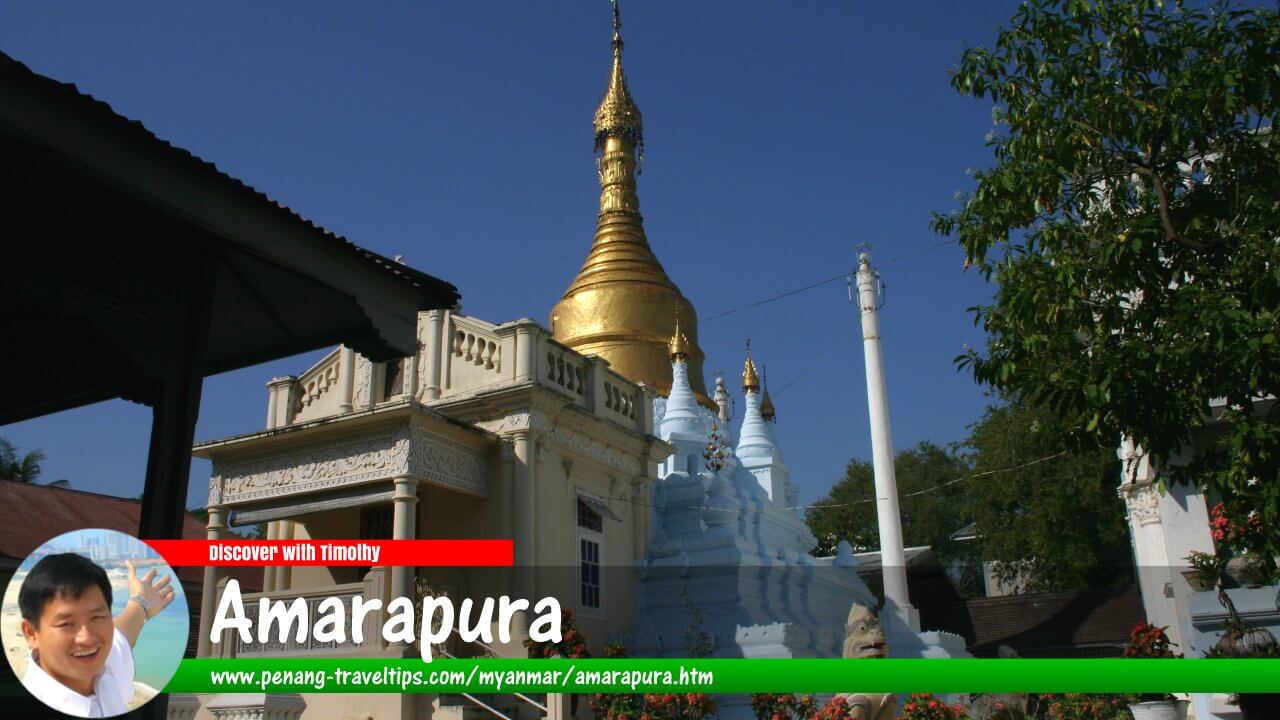 Amarapura (23 November 2003)
Also available: Amarapura (Malay Edition)
Amarapura (အမရပူရ) is one of Myanmar's historic royal capitals and an important cultural destination located south of Mandalay. Although it is no longer a capital city, Amarapura remains a popular place to visit because of its royal heritage, religious sites, traditional crafts and the famous U Bein Bridge.
The name Amarapura means “City of Immortality”. Founded in the late 18th century, the city served as the royal capital of Myanmar before the capital was moved to nearby Mandalay. Today, Amarapura forms part of the greater Mandalay urban area and is usually visited as a day trip from Mandalay.
For visitors exploring the Mandalay region, Amarapura offers an opportunity to experience Myanmar's royal history, Buddhist traditions and local way of life beyond the modern city.
Quick Facts
- Country: Myanmar
- Location: South of Mandalay, near the eastern bank of Taungthaman Lake
- Status: Historic royal capital and township within the Mandalay area
- Founded: 1783
- Founder: King Bodawpaya of the Konbaung Dynasty
- Distance from Mandalay: About 11 kilometres south of Mandalay city centre
- Known for: U Bein Bridge, Mahagandhayon Monastery, Pahtodawgyi Pagoda and traditional silk weaving
- Best known attraction: U Bein Bridge, one of the world's longest teak footbridges
- Main access point: Mandalay
- Recommended visit duration: Half day to one day
- Best time to visit: November to February, when the weather is cooler and more comfortable
Geography and Location
Amarapura is located in central Myanmar, approximately 11 kilometres south of Mandalay. It lies within the Mandalay metropolitan area and is one of the historic destinations that visitors commonly include when exploring the region.
The town is situated near Taungthaman Lake, a shallow lake that has become closely associated with Amarapura because of the famous U Bein Bridge. The surrounding landscape consists mainly of flat plains, agricultural land and settlements along the eastern bank of the lake.
Relationship with Mandalay
Although Amarapura was once a royal capital, today it functions mainly as a historic township within the wider Mandalay area. Most visitors do not stay overnight in Amarapura; instead, they use Mandalay as their base and make a day trip to explore its attractions.
Its close proximity to Mandalay makes Amarapura easy to combine with other important destinations nearby, including Sagaing, Inwa and Mingun. Together, these places form one of the most significant cultural and historical areas in Myanmar.
Taungthaman Lake
Taungthaman Lake is one of the defining geographical features of Amarapura. The lake is best known as the setting of U Bein Bridge, where visitors gather especially during sunrise and sunset to enjoy views across the water.
The lake also supports local communities who depend on fishing, agriculture and small-scale activities. Beyond its scenic appeal, it remains part of the everyday landscape of Amarapura.
Climate
Amarapura has a tropical monsoon climate similar to the wider Mandalay region. The area generally experiences hot weather for much of the year, with a distinct dry season and rainy season.
- Cool and dry season (November to February): This is the most comfortable period to visit Amarapura, with cooler temperatures suitable for sightseeing and outdoor activities.
- Hot season (March to May): Temperatures can become very high, especially during the afternoon. Visitors should plan outdoor visits earlier in the day and carry sufficient drinking water.
- Rainy season (June to October): Rainfall is more frequent, although the countryside becomes greener and the area remains accessible.
Landscape and Surroundings
Unlike the busy urban environment of Mandalay, Amarapura retains a more relaxed atmosphere with traditional neighbourhoods, monasteries, farmland and open landscapes.
This combination of historical sites and rural surroundings gives visitors a glimpse of a different side of Myanmar, where ancient royal heritage exists alongside everyday village life.
History of Amarapura
Amarapura has an important place in Myanmar's history as one of the country's former royal capitals. Although its period as a capital was relatively short compared with other royal cities, Amarapura played a significant role during the Konbaung Dynasty, the last ruling dynasty of Myanmar before British colonisation.
The remains of Amarapura today reflect a period when Myanmar's kings established royal cities around important religious and cultural centres. For visitors, exploring Amarapura provides a connection to Myanmar's royal past and traditional Buddhist heritage.
Foundation of Amarapura
Amarapura was founded in 1783 by King Bodawpaya, the sixth king of the Konbaung Dynasty. The king moved the royal capital from Ava to a new location near the eastern bank of the Irrawaddy River and named the new city Amarapura, meaning “City of Immortality”.
The establishment of Amarapura followed the tradition of Myanmar kings creating new royal capitals that reflected their authority and religious devotion. Like other royal cities, Amarapura was designed with palaces, monasteries, religious monuments and administrative buildings.
Amarapura as a Royal Capital
During its time as the royal capital, Amarapura became a centre of government, religion and culture. The city attracted monks, craftsmen, artists and scholars, contributing to its importance in Myanmar's cultural development.
One of the notable developments during this period was the growth of important Buddhist institutions. Monasteries and religious schools established around Amarapura helped strengthen the city's role as a centre of Buddhist learning.
Transfer of the Capital to Ava
In 1823, King Bagyidaw moved the royal capital back to Ava, another historic capital located near present-day Mandalay. However, Amarapura continued to remain an important settlement and religious centre.
The movement of capitals between Amarapura and Ava reflected a pattern in Myanmar history, where successive kings established their own royal centres according to political, strategic and cultural considerations.
Return as Royal Capital and the Move to Mandalay
Amarapura once again became the royal capital in 1841 during the reign of King Tharrawaddy. However, its role as a royal city came to an end when King Mindon founded Mandalay in 1857 and moved the capital to the new city.
The establishment of Mandalay marked a new chapter in Myanmar's history. Many structures and materials from Amarapura were transferred to Mandalay, contributing to the decline of Amarapura as a royal centre.
Colonial Period and Later Development
After the royal capital moved to Mandalay, Amarapura gradually became a quieter township. However, it retained its religious importance, with monasteries, pagodas and traditional crafts continuing to flourish.
The town became particularly known for silk and cotton weaving, traditions that continue to contribute to the local economy today.
Amarapura Today
Modern Amarapura is no longer a royal city, but its historical identity remains strong. Visitors can still find traces of its past through ancient monuments, religious sites, traditional workshops and the landscape around Taungthaman Lake.
The famous U Bein Bridge, built using teak pillars believed to have come from the former royal palace, has become a symbol of Amarapura and one of Myanmar's most recognisable cultural landmarks.
For visitors exploring the Mandalay region, Amarapura offers an opportunity to experience the connection between Myanmar's royal history, Buddhist traditions and local community life.
Administration and Location Context
Amarapura is located within Mandalay Region, one of the administrative divisions of Myanmar. Today, it is a township within the greater Mandalay urban area rather than an independent city.
Although Amarapura was once a royal capital, its modern identity is closely connected with Mandalay. Most visitors experience Amarapura as part of a wider Mandalay cultural itinerary, together with nearby historic destinations such as Sagaing, Inwa and Mingun.
Relationship with Mandalay
Mandalay is the nearest major city and the main base for visitors exploring Amarapura. The short distance between the two places makes Amarapura suitable for a half-day or full-day excursion.
Visitors staying in Mandalay can easily arrange transport to Amarapura, making it unnecessary to change accommodation. This allows travellers to combine several historical attractions in the Mandalay region within the same trip.
How to Get to Amarapura
As Amarapura is located close to Mandalay, most visitors reach it by travelling from Mandalay. There is no separate airport or long-distance transport terminal serving Amarapura directly.
By Taxi or Private Car
Hiring a taxi or private car with a driver is one of the most convenient ways to visit Amarapura. This option allows visitors to travel at their own pace and combine Amarapura with nearby attractions in the Mandalay region.
A private vehicle is especially useful for travellers who plan to visit several locations in one day, such as U Bein Bridge, Sagaing or Inwa.
By Motorcycle or Motorbike Taxi
Independent travellers may choose to explore Amarapura by motorcycle. Motorbikes provide flexibility and are commonly used by travellers who prefer a more adventurous way of exploring the Mandalay area.
Visitors should consider road conditions, traffic, weather and local regulations before choosing this option.
By Bicycle
Amarapura's relatively flat landscape makes cycling possible, especially for visitors who enjoy exploring at a slower pace.
However, the hot climate of the Mandalay region can make cycling tiring, particularly during the afternoon. Visitors who choose to cycle should plan their route carefully and bring sufficient drinking water.
By Tour Arrangement
Many hotels and travel agencies in Mandalay offer day tours that include Amarapura together with other nearby historical destinations.
This can be a practical option for visitors who prefer a planned itinerary, especially when visiting multiple sites in the Mandalay region within a limited time.
How to Get Around Amarapura
Amarapura is spread across several attractions, so visitors will usually need some form of transport rather than relying entirely on walking.
Walking
Walking is suitable for exploring individual attractions, such as the area around U Bein Bridge or visiting nearby monasteries.
However, the distance between major attractions can be considerable, and the hot weather may make long walks uncomfortable.
Private Transport
A hired car, taxi or driver is the most practical option for visitors who want to see several attractions in Amarapura in a single visit.
This is particularly useful because many travellers combine Amarapura with other nearby destinations rather than visiting only one attraction.
Local Transport
Local forms of transport may be available within Amarapura, but they may not always be convenient for visitors unfamiliar with the area or language.
Travellers who want a smoother experience may find it easier to arrange transport through their hotel, a local driver or a travel service in Mandalay.
Where to Stay in Amarapura
Most visitors do not stay overnight in Amarapura. Instead, they stay in Mandalay and visit Amarapura as part of a day trip. The short distance between Mandalay and Amarapura makes this the most practical arrangement for most travellers.
Staying in Mandalay provides visitors with a wider choice of hotels, restaurants, shops and transport options. It also makes it easier to combine Amarapura with other nearby attractions such as Sagaing, Inwa and Mingun.
Staying in Mandalay
Mandalay offers a broad range of accommodation, from budget guesthouses to international-standard hotels. Visitors can choose accommodation based on their travel style, budget and planned activities.
For travellers intending to explore the historic sites around Mandalay, staying in a convenient location within the city allows easier access to transport services and day tours.
Staying Near Amarapura
There are limited accommodation choices directly within Amarapura compared with Mandalay. Visitors who specifically want a quieter environment near the historic sites may find local guesthouses or smaller accommodation options, but most international travellers still prefer the convenience of staying in Mandalay.
Food in Amarapura
Amarapura offers visitors an opportunity to experience local Myanmar food in a more traditional setting. However, because it is mainly a historic township rather than a major tourist city, dining options are more limited compared with Mandalay.
Many visitors combine their Amarapura visit with meals in Mandalay, where there is a much wider variety of restaurants serving Myanmar, Indian, Chinese and international cuisine.
Local Myanmar Food
Visitors to Amarapura can try popular Myanmar dishes that are commonly available throughout the Mandalay region. These include rice dishes, curries, noodles, soups and traditional snacks.
Some dishes visitors may wish to try include:
- Mohinga: A traditional Myanmar rice noodle soup often eaten as breakfast.
- Lahpet Thoke: A salad made with fermented tea leaves, nuts and other ingredients.
- Myanmar curries: Dishes usually served with rice and a variety of side dishes.
- Shan noodles: A popular noodle dish originating from Shan State and enjoyed throughout Myanmar.
Flavours of Myanmar Food
Visitors from Malaysia may find Myanmar food familiar in some ways, as it shares influences with neighbouring countries such as India, China and Thailand. However, Myanmar cuisine has its own character and is generally less spicy than many Malaysian or Thai dishes.
Most Myanmar dishes focus more on savoury flavours, herbs, spices and fermented ingredients rather than strong chilli heat. Dishes such as curries, noodles and soups are often mild to moderately spiced, with chilli usually available separately for those who prefer a hotter taste.
Visitors who are not accustomed to spicy food will generally find Myanmar cuisine approachable. Those who enjoy stronger flavours can add chilli or spicy condiments according to their preference.
Tea Shops
Tea shops are an important part of daily life in Myanmar. They serve as social gathering places where people meet, drink tea and enjoy simple meals or snacks.
Visitors can experience local culture by spending time at a traditional tea shop, although those with specific dietary requirements should ask about ingredients before ordering.
Halal Food
Visitors looking for halal food will find more options in Mandalay than in Amarapura itself. Mandalay has a long-established Muslim community and offers restaurants serving halal Indian Muslim cuisine and other Muslim-friendly food options.
Travellers who require halal meals are advised to plan their dining arrangements around Mandalay, especially if they are staying there as their main base.
When eating outside dedicated halal restaurants, visitors should ask about ingredients and food preparation methods to ensure that meals meet their dietary requirements.
Dining Tips
Visitors should remember that Amarapura is primarily a heritage destination rather than a food destination. The main attraction of visiting Amarapura is its history, culture and scenery.
For a wider culinary experience, travellers can explore the restaurants, markets and tea shops of Mandalay before or after their visit to Amarapura.
Places of Interest in Amarapura
Amarapura is best known for its historical and cultural attractions. Although it is smaller than other destinations in Myanmar, the town offers visitors an opportunity to experience royal heritage, Buddhist traditions and traditional crafts.
U Bein Bridge
U Bein Bridge is the most famous attraction in Amarapura and one of Myanmar's most recognisable landmarks. Stretching across Taungthaman Lake, the teak footbridge provides a scenic walkway connecting villages on both sides of the lake.
The bridge is especially popular during sunrise and sunset, when visitors can enjoy views of monks, villagers, fishermen and boats moving across the lake. Beyond its photographic appeal, U Bein Bridge remains a working bridge used by local residents in their daily lives.
Mahagandhayon Monastery
Mahagandhayon Monastery is one of the largest and most respected Buddhist monasteries in Myanmar. It is known as an important centre of Buddhist learning and monastic discipline.
Visitors who come at the appropriate time may observe the daily routine of monks, including the traditional meal offering. The experience provides insight into the role of Buddhism in Myanmar society.
Visitors should dress respectfully and follow monastery guidelines when entering religious areas.
Pahtodawgyi Pagoda
Pahtodawgyi Pagoda is a historic Buddhist monument in Amarapura. Built during the early period of the city's history, the pagoda reflects the importance of Buddhism during Myanmar's royal era.
The site offers visitors another perspective of Amarapura's heritage beyond the better-known U Bein Bridge.
Traditional Silk and Textile Weaving
Amarapura has long been associated with traditional weaving, particularly silk and cotton textiles. Local weaving workshops continue practices that have been passed down through generations.
Visitors interested in Myanmar handicrafts can observe traditional techniques and learn about the craftsmanship behind locally produced textiles.
Exploring Local Life
One of the attractions of Amarapura is the opportunity to experience everyday life away from Myanmar's larger cities. Visitors may encounter traditional neighbourhoods, small workshops, monasteries and communities around Taungthaman Lake.
Exploring at a relaxed pace allows travellers to appreciate Amarapura not only as a historical site but also as a living community.
Best Time to Visit Amarapura
The best time to visit Amarapura is generally from November to February, when temperatures are cooler and the weather is more comfortable for outdoor sightseeing.
Cool Season (November to February)
This is the most popular period for visiting Amarapura. The cooler weather makes it easier to explore outdoor attractions, walk around heritage sites and enjoy sunrise or sunset views at U Bein Bridge.
Hot Season (March to May)
The Mandalay region can become extremely hot during this period. Visitors should plan outdoor activities during the morning or late afternoon and avoid prolonged exposure to the midday sun.
Rainy Season (June to October)
Rainfall is more frequent during the monsoon season. While travel remains possible, visitors should be prepared for wet conditions, especially when visiting outdoor attractions such as U Bein Bridge.
Travel Conditions
Travel conditions can change from time to time. Visitors should check the latest information before travelling to Myanmar and Amarapura.
Travellers should ensure that they have valid travel documents, understand current entry requirements, follow local regulations and respect local customs and traditions.
When visiting monasteries and religious sites, visitors should dress modestly, remove footwear where required and behave respectfully towards places of worship and local communities.
References
- Encyclopaedia Britannica - Amarapura
- Encyclopaedia Britannica - Myanmar
- Ministry of Hotels and Tourism Myanmar - Official Tourism Portal
- Official Government Portal of Myanmar
- UNESCO World Heritage Centre
