
Bagan Travel Guide ပုဂံ
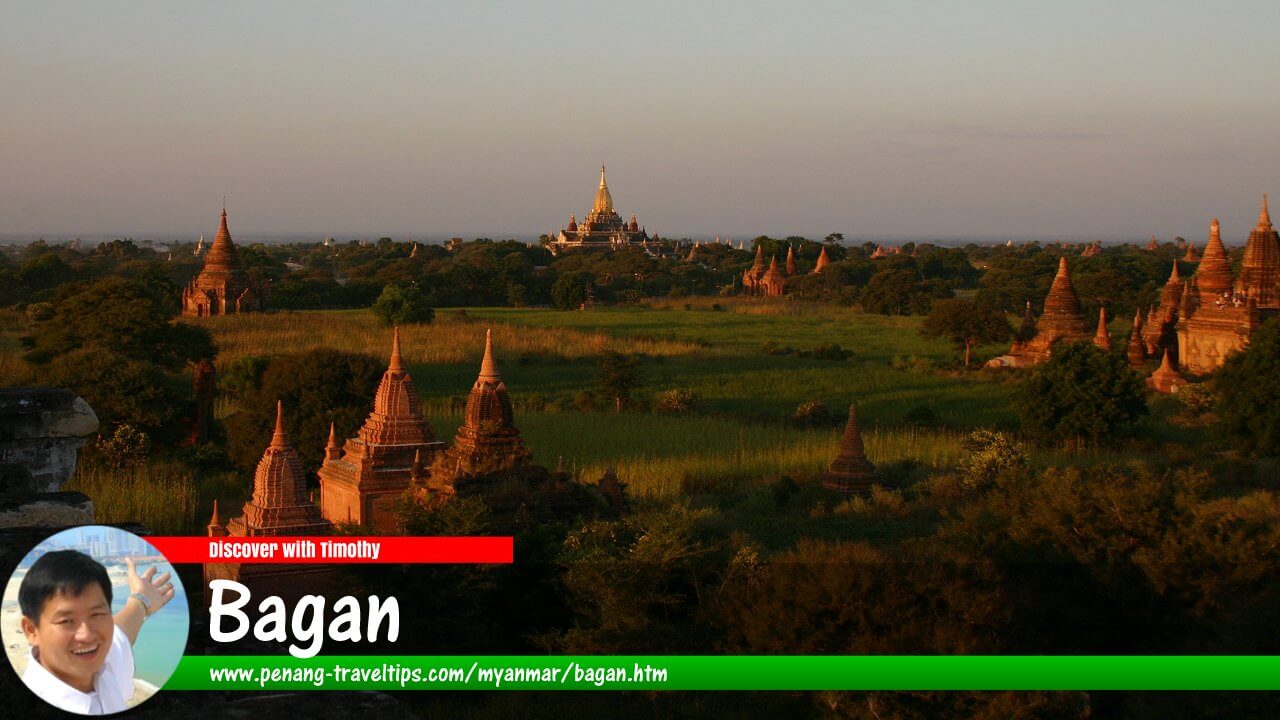 Bagan (25 November 2003)
Also available: Bagan (Malay Edition)
Bagan (ပုဂံ) is Myanmar's best-known historical destination and one of the world's greatest archaeological landscapes. Once the capital of the Pagan Kingdom, Bagan is home to thousands of ancient Buddhist temples, pagodas, monasteries and monuments spread across a vast plain along the Ayeyarwady River. Today, it is recognised as a UNESCO World Heritage Site and attracts visitors from around the world who come to experience its remarkable architectural, historical and spiritual heritage.
Unlike many ancient cities where only a handful of monuments remain, Bagan preserves an extraordinary concentration of religious structures built over several centuries. Exploring Bagan is not about visiting a single temple but discovering an entire landscape shaped by faith, art and royal ambition.
Most visitors spend at least two or three days exploring Bagan's archaeological zone. Whether travelling by e-bike, bicycle, horse cart or private car, visitors can admire magnificent temples, watch the sunrise or sunset over the temple-studded plains, visit traditional lacquerware workshops and experience one of Southeast Asia's most iconic cultural destinations.
Origin of the Name
The modern name Bagan (ပုဂံ) is the preferred English spelling that more closely reflects the Burmese pronunciation. In older English books, maps and travel guides, the city was commonly written as Pagan, and the ancient kingdom was widely known as the Pagan Kingdom.
The name is believed to have evolved from earlier Burmese forms such as Pukam or Pugam, although its precise linguistic origin remains uncertain. Over time, the modern spelling "Bagan" became the standard international usage, while "Pagan" continues to appear in historical literature and scholarly works.
Today, the names Bagan and Pagan generally refer to the same historic city, although "Bagan" is now used almost universally in tourism and contemporary publications.
Quick Facts
- Country: Myanmar (မြန်မာ)
- Region: Mandalay Region
- Burmese name: ပုဂံ
- Historical English name: Pagan
- Status: Ancient royal capital and UNESCO World Heritage Site
- Location: Central Myanmar, on the eastern bank of the Ayeyarwady River
- Founded: Around the 9th century AD as the capital of the Pagan Kingdom
- UNESCO inscription: 2019
- Known for: Thousands of Buddhist temples, pagodas, monasteries and archaeological monuments
- Main gateway: Nyaung-U
- Nearest airport: Nyaung-U Airport
- Recommended stay: 2 to 3 days
- Best time to visit: November to February
Understanding Bagan
Many first-time visitors imagine Bagan as a single ancient temple or archaeological site. In reality, Bagan is a vast archaeological zone covering dozens of square kilometres and containing more than 2,000 surviving temples, pagodas, monasteries and other historic structures. At the height of the Pagan Kingdom, it is believed that over 10,000 religious monuments once stood across the plain.
Today, visitors explore several interconnected areas, including Old Bagan, New Bagan, Nyaung-U and the surrounding archaeological landscape. Each area offers a different perspective on the history, culture and daily life of the region.
Bagan is not simply a place to admire ancient architecture. It represents the birthplace of Myanmar's classical civilisation, where Theravada Buddhism flourished under powerful kings who commissioned thousands of religious monuments that continue to inspire visitors nearly a thousand years later.
Geography and Location
Bagan (ပုဂံ) is located in central Myanmar (မြန်မာ), on the eastern bank of the Ayeyarwady River. The ancient city lies within Myanmar's Dry Zone, a broad plain characterised by low rainfall, open countryside and scattered vegetation. This dry climate has helped preserve thousands of brick temples and pagodas for centuries, making Bagan one of the world's most remarkable archaeological landscapes.
Today, Bagan forms part of the Mandalay Region and is one of Myanmar's most visited cultural destinations. The archaeological zone covers a vast area stretching across the plains south of Nyaung-U, where visitors can explore hundreds of temples, monasteries, stupas and ancient monuments set against a backdrop of farmland and villages.
The Bagan Archaeological Zone
The Bagan Archaeological Zone is a protected heritage area containing more than 2,000 surviving Buddhist monuments dating mainly from the 11th to the 13th centuries. At the height of the Pagan Kingdom, historians believe that over 10,000 religious structures once stood across the plain, reflecting the wealth and devotion of the kingdom's rulers and people.
Rather than being concentrated in a single location, the monuments are spread across dozens of square kilometres. Visitors can spend several days exploring the archaeological zone and still discover temples and historic sites away from the main tourist routes.
Old Bagan, New Bagan and Nyaung-U
The Bagan area is commonly divided into three main centres. Old Bagan lies within the heart of the archaeological zone and contains many of the most important temples and historical monuments. Because of its heritage significance, development is carefully controlled to preserve the area's historical character.
New Bagan was established in the late 20th century to accommodate residents relocated from Old Bagan as part of heritage conservation efforts. Today, it offers a range of hotels, restaurants and visitor services while remaining close to the archaeological sites.
Nyaung-U, located to the northeast of Old Bagan, serves as the main gateway to the region. It is home to the area's airport, railway station, markets and numerous accommodation options, making it the arrival point for many visitors.
The Ayeyarwady River
The Ayeyarwady River has played a central role in Bagan's history for more than a thousand years. As Myanmar's longest river, it served as an important transportation route linking the Pagan Kingdom with other parts of the country. The river also supported agriculture, trade and the movement of people, helping Bagan flourish as the political, religious and economic centre of early Myanmar.
Today, river cruises remain a popular way to travel between Bagan and Mandalay, offering passengers scenic views of rural Myanmar and the opportunity to experience one of the country's historic waterways.
Landscape and Climate
Unlike the lush tropical scenery found in many parts of Southeast Asia, Bagan is characterised by open plains dotted with ancient temples, tamarind trees, acacia and pockets of cultivated farmland. During the dry season, the landscape takes on warm golden and earthy tones that complement the red brick monuments.
Bagan experiences three main seasons. The cool, dry season from November to February is the most comfortable time for sightseeing. Temperatures rise significantly during the hot season from March to May, while the rainy season from June to October brings occasional showers that transform the surrounding countryside into a greener landscape.
History of Bagan
The history of Bagan (ပုဂံ) is closely linked to the rise of the Pagan Kingdom, the first major kingdom to unify much of the territory that makes up modern Myanmar. Between the 9th and 13th centuries, Bagan developed from a regional settlement into a powerful royal capital and one of the greatest centres of Buddhist culture in Southeast Asia.
The thousands of temples and pagodas that dominate the Bagan landscape today are a lasting reminder of this remarkable period. They represent not only religious devotion but also the wealth, artistic achievements and political power of the Pagan kings.
Early Settlement of Bagan
The origins of Bagan date back to the early centuries of Myanmar history. Archaeological evidence suggests that communities had already settled in the region before the rise of the Pagan Kingdom.
Located along the Ayeyarwady River, the area offered important advantages. The river provided a route for trade and communication, while the surrounding plains supported agriculture that helped sustain a growing population.
The Rise of the Pagan Kingdom
The Pagan Kingdom emerged as a major power during the 9th century. According to traditional chronicles, King Anawrahta, who ruled from 1044 to 1077, played a crucial role in transforming Bagan into the centre of a unified Myanmar state.
Under King Anawrahta, the kingdom expanded its influence and adopted Theravada Buddhism as the dominant religious tradition. His reign marked the beginning of a golden age in which Bagan became a major centre of Buddhist learning, architecture and culture.
King Anawrahta and the Spread of Theravada Buddhism
King Anawrahta is regarded as one of the most important figures in Myanmar history. During his reign, Buddhism underwent significant development, and numerous religious monuments were constructed across Bagan.
The king is traditionally credited with bringing Buddhist scriptures and religious traditions from the Mon kingdom of Thaton to Bagan, strengthening Theravada Buddhism throughout his realm.
The spread of Buddhism had a profound influence on Bagan's identity. Temples, monasteries and pagodas became centres not only of worship but also of education, art and social life.
The Golden Age of Bagan
Bagan reached its greatest heights between the 11th and 13th centuries. During this period, successive kings continued to build religious monuments throughout the kingdom.
Among the most notable rulers was King Kyansittha, who reigned from 1084 to 1113. His reign is remembered for political stability, cultural development and the construction of some of Bagan's finest monuments, including the Ananda Temple.
Later rulers continued the tradition of temple building, creating the extraordinary landscape that visitors see today. The construction of thousands of religious structures reflected both royal power and the devotion of the people.
The Architecture and Culture of Bagan
The temples of Bagan represent a unique blend of artistic influences from different parts of Asia. Myanmar craftsmen developed distinctive architectural styles featuring brick construction, elaborate carvings, murals and Buddha images.
Many temples served multiple purposes, functioning as places of worship, centres of learning and symbols of royal merit. The creation of these monuments was closely connected to the Buddhist belief that acts of generosity and devotion could create spiritual merit.
The Decline of the Pagan Kingdom
By the late 13th century, the Pagan Kingdom began to weaken due to several factors, including internal political challenges, economic pressures and the increasing amount of land controlled by religious institutions.
The arrival of Mongol forces in the late 13th century further contributed to the decline of Pagan's political power. Although the city was not completely destroyed, the kingdom gradually lost its position as the dominant power in Myanmar.
Bagan After the Pagan Kingdom
After the fall of the Pagan Kingdom, Bagan remained an important religious and cultural centre. Although it was no longer the capital of a powerful empire, many temples continued to be maintained and used by Buddhist communities.
Over the centuries, Bagan experienced periods of restoration and preservation. Earthquakes, particularly the major earthquake of 1975, damaged many monuments, but restoration efforts have helped preserve this extraordinary heritage.
Bagan as a World Heritage Site
In 2019, Bagan was inscribed as a UNESCO World Heritage Site in recognition of its outstanding cultural significance. The designation acknowledges Bagan as an exceptional example of Buddhist art, architecture and urban development from the medieval period.
Today, Bagan stands as one of Myanmar's most important symbols and continues to attract visitors who come to experience the history, spirituality and beauty of this ancient city.
Administration and Location Context
Bagan (ပုဂံ) is located in Nyaung-U District of Mandalay Region, Myanmar. Although widely known as a city, Bagan today refers mainly to the ancient archaeological area and the surrounding settlements that support tourism and local communities.
The wider Bagan area includes three main centres: Old Bagan, New Bagan and Nyaung-U. Together, these areas form the gateway for visitors exploring the Bagan Archaeological Zone.
Old Bagan
Old Bagan is the historic heart of the archaeological zone. It contains many of the most important temples, pagodas and monuments from the Pagan Kingdom.
Because of its heritage importance, development within Old Bagan is carefully controlled. Visitors will find fewer modern facilities here compared with New Bagan and Nyaung-U, but the advantage is staying close to the ancient monuments.
New Bagan
New Bagan was established after residents were relocated from the Old Bagan area as part of heritage conservation measures. Today, it has become an important accommodation area, with hotels, restaurants and visitor services.
Many travellers choose New Bagan because it offers a wider range of accommodation while remaining close to the archaeological sites.
Nyaung-U
Nyaung-U is the main gateway to Bagan and the most convenient arrival point for many visitors. It has the area's airport, railway station, markets, restaurants and a wide selection of accommodation.
Travellers arriving by air, train or bus will usually pass through Nyaung-U before exploring the temples of Bagan.
How to Get to Bagan
Bagan is located in central Myanmar and can be reached by air, train, bus, river cruise or private vehicle. The choice of transport depends on the traveller's budget, available time and preferred travel experience.
By Air
The nearest airport is Nyaung-U Airport, which serves the Bagan area. Domestic flights connect Nyaung-U with major cities in Myanmar, including Yangon and Mandalay.
Flying is the fastest option for visitors with limited time. From the airport, travellers can take a taxi or arrange hotel transport to reach Old Bagan, New Bagan or Nyaung-U.
By Train
Train services connect Bagan with other parts of Myanmar, including Yangon and Mandalay. Train travel is slower than flying but offers visitors a chance to experience a more traditional way of travelling through the countryside.
Travellers should check current train schedules before planning their journey, as services and travel times may change.
By Bus
Long-distance buses are a common way to reach Bagan, particularly for budget travellers. Bus services connect Bagan with major destinations such as Yangon and Mandalay.
Modern buses often provide a comfortable journey, although travel times can be lengthy due to road conditions and distance.
By River Cruise
Travelling to Bagan by boat along the Ayeyarwady River is one of the most scenic ways to arrive. River cruises, particularly between Mandalay and Bagan, allow travellers to experience rural Myanmar landscapes and traditional riverside communities.
Although slower than other forms of transport, a river journey provides a unique perspective on the importance of the Ayeyarwady River in Myanmar history.
By Private Vehicle
Travellers who prefer flexibility can hire a private car with a driver. This option is useful for visitors who wish to combine Bagan with other destinations in central Myanmar.
A private vehicle allows stops along the way and is particularly suitable for families, groups or travellers carrying more luggage.
How to Get Around Bagan
The Bagan Archaeological Zone covers a large area, and most visitors use some form of transport to explore the temples. Walking between all major sites is not practical due to the distances and hot climate.
E-bike
Electric bicycles, commonly known as e-bikes, are one of the most popular ways to explore Bagan. They provide visitors with the freedom to travel independently while covering more distance than walking or cycling.
E-bikes are especially suitable because many smaller temples are located along quiet paths away from the main roads.
Bicycle
Traditional bicycles remain an option for visitors who enjoy slower exploration. Cycling allows travellers to experience the landscape at a relaxed pace.
However, the heat and size of the archaeological zone mean that cycling can be physically demanding, especially during the hot season.
Taxi and Private Car
Hiring a taxi or private car with a driver is a comfortable option, especially for visitors travelling with family, older travellers or those visiting during the hotter months.
A local driver can also provide useful guidance on temple locations and help visitors make the most of their limited time.
Horse Cart
Horse carts are a traditional way of exploring Bagan and offer a slower, more nostalgic experience. Travelling through the temple plains by horse cart allows visitors to appreciate the atmosphere of the ancient landscape at a relaxed pace.
Although slower than e-bikes or cars, horse carts remain popular among visitors seeking a more traditional experience.
Where to Stay in Bagan
Bagan (ပုဂံ) offers a wide range of accommodation options, from luxury riverside resorts to family-run guesthouses. Visitors can choose to stay in Old Bagan, New Bagan or Nyaung-U, depending on their travel style, budget and preferred experience.
Unlike a modern city where hotels are concentrated in one central area, Bagan's accommodation is spread across these three main locations. Choosing the right area can greatly influence the convenience and atmosphere of a visit.
Staying in Old Bagan
Old Bagan is the closest area to many of the most famous temples and archaeological monuments. Staying here allows visitors to enjoy the atmosphere of the ancient landscape, with historic pagodas often located nearby.
This area is particularly suitable for travellers who want a more exclusive heritage experience and prefer to be close to the main archaeological attractions.
However, accommodation in Old Bagan is generally more expensive, and dining and shopping options are more limited compared with Nyaung-U.
Staying in New Bagan
New Bagan is a popular choice among many travellers because it offers a good balance between convenience, comfort and price.
The area has numerous hotels, restaurants, cafés and travel services. It is close enough to the archaeological zone while offering more facilities for visitors who plan to stay several days.
New Bagan is suitable for families, independent travellers and those looking for a wider choice of accommodation.
Staying in Nyaung-U
Nyaung-U is the most practical area for many visitors, especially those arriving by air, train or bus. It has the largest concentration of restaurants, shops, markets and budget accommodation.
Travellers who enjoy a more local atmosphere may prefer Nyaung-U, where they can experience everyday life beyond the temple zone.
It is also a convenient base for visitors who plan to explore Bagan by e-bike, bicycle or local transport.
Recommended Length of Stay
Most visitors should plan to spend at least two days exploring Bagan. A two-night stay allows enough time to visit the major temples, enjoy sunrise or sunset views and explore the surrounding villages.
Travellers with more time can spend three or more days discovering smaller temples, visiting craft workshops and experiencing the peaceful atmosphere of the archaeological landscape at a slower pace.
Food in Bagan
Bagan offers visitors the opportunity to experience traditional Myanmar cuisine alongside international dishes catering to travellers from around the world.
The food scene is concentrated mainly in Nyaung-U and New Bagan, where visitors will find Myanmar restaurants, tea shops, cafés and eateries serving regional and international food.
Myanmar Cuisine
Myanmar cuisine reflects influences from neighbouring cultures including India, China and Thailand, while maintaining its own distinctive identity.
Compared with many Southeast Asian cuisines, Myanmar food is generally not extremely spicy. Instead, it often focuses on savoury flavours, herbs, fermented ingredients and the natural taste of the main ingredients.
Chilli is often served separately, allowing diners to adjust the level of spiciness according to their preference.
Local Dishes to Try in Bagan
- Mohinga: A traditional rice noodle soup with fish broth, lemongrass, ginger and spices. It is widely considered Myanmar's national dish and is commonly eaten for breakfast.
- Lahpet Thoke: A unique tea leaf salad made with fermented tea leaves, nuts, seeds and crunchy ingredients. It offers a distinctive combination of savoury, sour and slightly bitter flavours.
- Myanmar Curry: Usually served with rice and side dishes, Myanmar curry is often milder than many Indian curries but rich in flavour.
- Shan Noodles: A popular noodle dish originating from Shan State, usually prepared with rice noodles, tomato-based sauce and meat or vegetables.
- Traditional Snacks: Tea shops and local markets offer various Myanmar snacks, including fried items, sweets and savoury treats.
Restaurants and Dining Areas
Nyaung-U has the widest selection of restaurants in the Bagan area, ranging from simple local eateries to restaurants serving international cuisine.
New Bagan also has many restaurants catering to visitors, including establishments offering vegetarian, Western and Asian dishes.
Dining in Bagan is often a relaxed experience. Many restaurants provide outdoor seating where visitors can enjoy meals while experiencing the peaceful atmosphere of the ancient surroundings.
Halal Food for Muslim Visitors
Muslim visitors can find halal food options in Bagan, although the choices are more limited compared with larger cities such as Yangon or Mandalay.
Nyaung-U generally offers the best selection because it has a larger local population and more dining establishments. Some restaurants serving Indian Muslim cuisine may provide halal options.
Muslim travellers are advised to ask restaurant staff about ingredients and food preparation methods before ordering, especially when halal certification is required.
Vegetarian food is also widely available in Bagan, making it easier for visitors with dietary preferences to find suitable meals.
Tea Shops in Bagan
Tea shops are an important part of Myanmar social life. They are places where locals gather to drink tea, eat snacks and chat with friends and family.
Visiting a traditional tea shop in Bagan provides an opportunity to experience everyday Myanmar culture beyond the famous temples and archaeological sites.
Places of Interest in Bagan
Bagan (ပုဂံ) is unlike most tourist destinations in Myanmar. Its attraction does not come from a single monument but from a vast landscape filled with thousands of ancient temples, pagodas, monasteries and archaeological remains.
Although more than 2,000 monuments survive today, visitors do not need to see every temple to appreciate Bagan. A carefully planned visit combining the major landmarks with quieter, lesser-known sites will provide a deeper understanding of this extraordinary ancient city.
Ananda Temple
Ananda Temple is considered one of the finest and most important temples in Bagan. Built in the 12th century during the reign of King Kyansittha, it represents the peak of Bagan architecture and is often described as the "Westminster Abbey of Myanmar".
The temple features a distinctive layout with four Buddha images facing the four cardinal directions. Its elegant design combines Mon, Indian and local Myanmar architectural influences.
Unlike many ancient monuments, Ananda Temple remains an active place of worship and continues to attract Buddhist pilgrims as well as visitors interested in history and architecture.
Shwezigon Temple
Shwezigon Pagoda is one of Bagan's most important religious sites and one of the earliest examples of Myanmar-style stupa architecture.
Construction began during the reign of King Anawrahta and was completed under King Kyansittha. The golden pagoda is believed to enshrine important Buddhist relics and remains an important pilgrimage destination.
The pagoda's golden exterior creates a striking sight, especially when illuminated by the morning or evening sunlight.
Dhammayangyi Temple
Dhammayangyi Temple is the largest temple in Bagan and one of its most impressive structures. Built during the reign of King Narathu in the 12th century, the temple is known for its massive brick construction and mysterious history.
The temple's interior contains blocked passages, adding to the legends surrounding its construction. Although visitors cannot explore all areas of the monument, its enormous scale makes it one of Bagan's most memorable sights.
Thatbyinnyu Temple
Thatbyinnyu Temple is one of the tallest monuments in Bagan, rising above the surrounding plain and serving as a prominent landmark.
Built in the 12th century, the temple reflects the confidence and artistic achievements of the Pagan Kingdom during its golden age.
Its height provides a reminder of the ambition and skill of the builders who created Bagan's remarkable skyline nearly a thousand years ago.
Htilominlo Temple
Htilominlo Temple is a large and beautifully preserved temple built during the reign of King Htilominlo in the 13th century.
The temple is admired for its detailed plaster carvings, decorative brickwork and large Buddha images. It is also located near traditional handicraft workshops where visitors can observe local artisans.
Sulamani Temple
Sulamani Temple is considered one of the finest examples of late Bagan architecture. Built in 1183 during the reign of King Narapatisithu, it combines impressive scale with elegant design.
The temple is known for its detailed brickwork and remaining traces of ancient murals, providing visitors with insight into the artistic achievements of the Pagan period.
Gawdawpalin Temple
Gawdawpalin Temple is one of Bagan's tallest temples and an important landmark near the Ayeyarwady River.
Built during the 12th and 13th centuries, it suffered damage during earthquakes but has undergone restoration. Its large interior halls and impressive structure make it one of the major monuments of the archaeological zone.
Manuha Temple
Manuha Temple offers a different perspective on Bagan's history. Built in the 11th century by King Manuha of the Mon people, it contains large Buddha images placed within relatively confined spaces.
The unusual design is often interpreted as reflecting the circumstances of King Manuha, who was brought to Bagan after the conquest of Thaton.
Shwesandaw Pagoda
Shwesandaw Pagoda is one of the most iconic monuments in the Bagan Archaeological Zone. Built in 1057 AD during the reign of King Anawrahta, it is among the earliest great Buddhist monuments of the Bagan Empire.
The name Shwesandaw means "Golden Hair Relic", referring to the belief that the pagoda houses a sacred hair relic of the Buddha.
The pagoda is easily recognised by its impressive whitewashed stupa rising above a series of five square terraces. Its architectural design became an important influence on later Buddhist monuments throughout Bagan.
A Monument From The Golden Age Of Bagan
Shwesandaw Pagoda was built during the reign of King Anawrahta, the ruler who established Bagan as a major Buddhist kingdom in the 11th century.
The construction of Shwesandaw reflects the growing importance of Theravada Buddhism during this period, when Bagan began transforming into one of the greatest religious and cultural centres of Southeast Asia.
Gubyaukgyi Temple (Myinkaba)
Gubyaukgyi Temple in Myinkaba is one of the most important temples in Bagan because of its remarkable collection of ancient mural paintings. Built in 1113 AD by Prince Rajakumar, son of King Kyanzittha, the temple represents a period of great artistic achievement in Bagan.
The interior walls of Gubyaukgyi Temple contain detailed paintings depicting scenes from the Jataka tales, the stories of the Buddha's previous lives. These murals are among the best-preserved examples of Bagan's artistic heritage.
The temple is also closely associated with the Myazedi Inscription, one of Myanmar's most important historical records, which is located nearby.
With its combination of architecture, religious art and historical importance, Gubyaukgyi Temple is one of the most rewarding lesser-known stops in Bagan.
Lawkananda Pagoda
Lawkananda Pagoda is a golden stupa located on the eastern bank of the Ayeyarwady River. Built in 1059 AD during the reign of King Anawrahta, it is traditionally believed to enshrine a sacred tooth relic of the Buddha.
Its riverside location gives Lawkananda Pagoda a special atmosphere, especially during sunrise and sunset when the golden stupa is illuminated by the changing light.
The pagoda is also one of the best places in Bagan to enjoy views over the Ayeyarwady River, making it popular among photographers and travellers seeking a quieter experience away from the main temple areas.
Mingalazedi Pagoda
Mingalazedi Pagoda is one of the last major monuments built during the golden age of Bagan. Completed in 1284 AD during the reign of King Narathihapate, it represents the final period of large-scale temple construction before the decline of the Bagan Empire.
The pagoda is known for its elegant proportions, large terraces and decorative glazed ceramic plaques depicting Buddhist scenes.
Because of its historical position as one of Bagan's final great monuments, Mingalazedi provides an important link between the flourishing Bagan era and the changes that followed the kingdom's decline.
Myazedi
Myazedi is one of the most significant historical sites in Bagan because of the famous Myazedi Inscription, dated to 1112 AD.
The inscription is sometimes described as the "Rosetta Stone of Myanmar" because it is written in four languages:
- Burmese.
- Pyu.
- Mon.
- Pali.
The inscription played an important role in helping historians understand the early history and languages of Myanmar. It provides valuable evidence about the cultural and religious environment of the Bagan period.
For visitors interested in history, Myazedi is one of the most meaningful stops in the Bagan Archaeological Zone.
Nanpaya Temple
Nanpaya Temple, located in Myinkaba, is one of the most unusual monuments in Bagan. Traditionally associated with King Manuha, the temple is notable for its use of sandstone blocks rather than the brick construction commonly seen in many Bagan temples.
Inside the temple are intricate stone carvings featuring strong Hindu-Brahmanical artistic influences, reflecting the diverse religious traditions that existed in Bagan during its early period.
The combination of unusual architecture, detailed carvings and historical mystery makes Nanpaya one of the most fascinating temples to explore.
Shwegugyi Temple
Shwegugyi Temple, meaning "Great Golden Cave", was built in 1131 AD by King Alaungsithu. It is located on a raised platform and is known for its elegant design and historical importance.
The temple features large Buddha images, carved stone details and inscriptions that provide information about its construction.
Visitors who climb to the upper levels can enjoy views over the surrounding Bagan plains, making Shwegugyi a rewarding stop both for history and scenery.
Tharabar Gate
Tharabar Gate is the only surviving gateway of the old fortified city of Bagan. Dating back to the 9th century, it is believed to have been built during the reign of King Pyinbya, one of the early rulers of Bagan.
The gate once formed part of the defensive walls surrounding the ancient city and provides a glimpse into Bagan before it became famous for its thousands of temples.
Tharabar Gate is also associated with traditional guardian spirits, known as nats, reflecting the blend of Buddhist and indigenous beliefs in Myanmar culture.
Although smaller than Bagan's famous temples, Tharabar Gate is historically significant and worth a brief stop when exploring Old Bagan.
Other Temples and Hidden Gems
Beyond the famous monuments, Bagan has many smaller temples that offer visitors a quieter and more personal experience. These lesser-known sites allow travellers to appreciate the diversity of Bagan's architecture away from the larger crowds.
Kyanzittha Cave Temple
Kyanzittha Cave Temple is traditionally associated with King Kyanzittha, one of Bagan's greatest rulers.
Although it is not a natural cave, its interior design creates a cave-like atmosphere with enclosed passageways, Buddha images and traces of ancient murals.
The temple is a quieter site where visitors can appreciate the architecture and religious atmosphere of early Bagan.
Mi Nyein Gon Temple
Mi Nyein Gon Temple is a smaller and less-visited temple in the Bagan Archaeological Zone.
Like many lesser-known monuments in Bagan, it offers an opportunity to explore ancient brick architecture, Buddha images and the peaceful surroundings of the temple plains without the crowds found at the major attractions.
For travellers who enjoy discovering hidden corners of historic sites, Mi Nyein Gon provides a more intimate Bagan experience.
A Famous Viewpoint Of Bagan
For many years, Shwesandaw Pagoda was among the most popular places in Bagan to watch the sunrise and sunset. Visitors would climb its terraces to enjoy sweeping views across the Bagan plains, where thousands of temples and pagodas rise above the landscape.
However, to preserve these fragile ancient structures, climbing on many monuments has now been restricted. Visitors should observe current regulations and enjoy the views from permitted locations.
Visiting Shwesandaw Pagoda
Although visitors can no longer experience the famous terrace climb of the past, Shwesandaw Pagoda remains an important monument to visit because of its age, architecture and historical connection with King Anawrahta.
Together with Ananda Temple, Shwezigon Pagoda, Dhammayangyi Temple, Thatbyinnyu Temple and Sulamani Temple, Shwesandaw Pagoda forms part of the essential heritage sites that should not be missed when exploring Bagan.
Bagan Archaeological Museum
The Bagan Archaeological Museum provides useful background information for visitors who want to understand the history and art of the ancient city.
The museum displays Buddha images, inscriptions, architectural fragments and artefacts discovered from the surrounding archaeological area.
A visit to the museum before exploring the temples can help visitors better appreciate the significance of the monuments they will see.
Myinkaba Village and Lacquerware Workshops
Myinkaba Village, located near Old Bagan, is known for its traditional lacquerware production. Lacquerware has been an important Myanmar craft for centuries and remains one of the country's most distinctive handicrafts.
Visitors can observe artisans creating lacquerware using traditional techniques involving multiple layers of lacquer, carving and decoration.
Purchasing locally made handicrafts directly from workshops also supports traditional craftspeople and helps preserve these skills for future generations.
Sunrise and Sunset Views
Watching the sunrise or sunset over the Bagan plains is one of the most memorable experiences for many visitors.
As the morning mist lifts or the evening light spreads across the landscape, the silhouettes of temples create one of Myanmar's most iconic scenes.
Visitors should follow current regulations regarding access to temples and viewpoints, as rules may change to protect the ancient monuments.
Hot Air Balloon Experience
A hot air balloon ride over Bagan is one of the most famous travel experiences in Myanmar. From above, passengers can appreciate the enormous scale of the archaeological landscape, with hundreds of temples appearing across the plains below.
Flights are usually operated during the cooler months when weather conditions are most suitable. Due to its popularity and limited operating season, advance booking is recommended.
Exploring Lesser-Known Temples
One of the pleasures of visiting Bagan is discovering smaller temples away from the main tourist routes.
Many lesser-known monuments provide a more peaceful experience, allowing visitors to appreciate the atmosphere of ancient Bagan without large crowds.
Exploring these quieter areas also reveals the true character of Bagan — not just as a collection of famous monuments, but as a vast historical landscape where temples, villages and local life continue to exist together.
Visiting Bagan: A Practical Guide
Bagan (ပုဂံ) is a destination best explored at a relaxed pace. Although many visitors focus on seeing the famous temples, the true experience of Bagan comes from combining sightseeing with time to appreciate the landscape, local communities and atmosphere of this ancient city.
Because the archaeological zone is spread across a large area, visitors should plan their time carefully and choose a suitable mode of transport. Rushing through Bagan in a single day may allow visitors to see a few famous monuments, but spending more time provides a much richer experience.
How Many Days Are Needed in Bagan?
One Day in Bagan
A one-day visit is possible for travellers with limited time, but the experience will be focused mainly on the major landmarks.
A typical one-day visit may include:
- Sunrise or early morning temple views
- Ananda Temple
- Shwezigon Pagoda
- Dhammayangyi Temple
- Htilominlo Temple
- One or two smaller temples
- Sunset views over the archaeological landscape
Visitors should be aware that the pace will be quite fast, especially because of the distance between attractions.
Two Days in Bagan
Two days is the recommended minimum for most travellers. It allows enough time to visit the major monuments while still leaving opportunities to explore quieter areas.
A two-day visit allows travellers to:
- Visit the most important temples without rushing
- Explore different parts of the archaeological zone
- Visit traditional villages and craft workshops
- Enjoy both sunrise and sunset experiences
- Spend time discovering lesser-known temples
Three or More Days in Bagan
Travellers with three or more days can experience Bagan at a slower pace. This is ideal for visitors interested in photography, history, architecture or simply enjoying the peaceful atmosphere.
Extra time allows opportunities to:
- Visit additional temples away from the main routes
- Explore local markets and villages
- Spend more time at museums and workshops
- Take a hot air balloon ride during the appropriate season
Suggested Bagan Itinerary
Day 1: Introduction to Bagan
- Visit Shwezigon Pagoda
- Explore Ananda Temple
- Visit Htilominlo Temple
- Explore nearby villages or lacquerware workshops
- Enjoy sunset views
Day 2: Exploring the Archaeological Zone
- Visit Dhammayangyi Temple
- Explore Sulamani Temple
- Visit Gawdawpalin Temple
- Discover smaller temples away from the main routes
- Visit Myinkaba Village
Day 3: A More Relaxed Experience
- Take a hot air balloon ride (season permitting)
- Visit additional temples
- Explore local markets
- Visit the Bagan Archaeological Museum
- Enjoy a slower final evening in Bagan
Temple Visiting Etiquette
Many of Bagan's monuments are still active religious sites. Visitors should remember that these temples are not merely historical attractions but places of worship that remain important to Myanmar Buddhists.
- Dress modestly when visiting temples and pagodas.
- Remove shoes and socks before entering religious areas where required.
- Avoid loud conversations or disruptive behaviour.
- Do not touch Buddha images or religious objects unnecessarily.
- Respect monks, worshippers and local customs.
What to Wear in Bagan
Bagan's climate can be hot and dry, especially during the daytime. Comfortable clothing, a hat, sunglasses and suitable walking shoes are recommended.
Visitors should also dress appropriately when entering temples. Shoulders and knees should generally be covered as a sign of respect.
Photography Tips
Bagan is one of the most photogenic destinations in Myanmar. The combination of ancient brick monuments, open plains and changing light creates excellent opportunities for photography.
- Early morning provides soft light and cooler temperatures.
- Sunset creates dramatic silhouettes across the temple plains.
- A wide-angle lens is useful for capturing the scale of larger temples.
- Respect restrictions on photography inside certain religious areas.
Dealing with the Heat
The climate of Bagan can be challenging, particularly during the hot season. Visitors should take practical precautions:
- Plan temple visits in the morning and late afternoon.
- Carry sufficient drinking water.
- Take breaks in shaded areas.
- Use sunscreen and protect yourself from strong sunlight.
Accessibility
Bagan's archaeological landscape can be challenging for visitors with limited mobility because many areas involve uneven ground, steps and outdoor walking.
However, visitors with mobility concerns can still enjoy Bagan by planning carefully and using private transport to reduce walking distances. Some major temples and viewpoints are easier to access than others.
Safety
Bagan is generally considered a safe destination for visitors. However, travellers should take normal precautions, including protecting personal belongings, being careful when riding e-bikes and taking care on uneven surfaces around ancient monuments.
During hot weather, heat-related illness is a greater concern than crime, so visitors should plan their activities sensibly.
Best Time to Visit Bagan
The best time to visit Bagan (ပုဂံ) is generally from November to February, when the weather is cooler and more comfortable for exploring the archaeological zone. During this period, visitors can spend longer hours outdoors, making it ideal for temple visits, cycling and photography.
Cool and Dry Season (November to February)
This is the most popular period to visit Bagan. Temperatures are more pleasant, rainfall is minimal and the skies are often clear, creating excellent conditions for sunrise and sunset photography.
The cooler mornings are especially enjoyable for exploring temples by e-bike or bicycle. This is also the main season for hot air balloon rides, subject to suitable weather conditions.
Hot Season (March to May)
Temperatures in Bagan can become extremely high during the hot season. Exploring the temple plains during the middle of the day can be physically demanding, especially for visitors travelling by bicycle or e-bike.
Visitors travelling during this period should plan sightseeing during the early morning and late afternoon, carry sufficient water and take regular breaks.
Rainy Season (June to October)
The rainy season brings more frequent showers to Bagan, although rainfall is generally lower than in many other parts of Myanmar because the region lies within the country's Dry Zone.
The landscape becomes greener during this period, and fewer tourists mean visitors may enjoy a quieter experience. However, some outdoor activities may be affected by weather conditions.
Travel Conditions
Travel conditions can change from time to time. Visitors should check the latest information before planning a trip to Bagan and Myanmar.
Travellers should ensure that they have valid travel documents, understand current entry requirements, check transportation availability and follow local regulations during their visit.
Visitors should also remain respectful of local customs, especially when visiting Buddhist temples and religious sites. Bagan is not only an archaeological destination but also a living spiritual landscape that remains important to local communities.
References
- UNESCO World Heritage Centre - Bagan
- Encyclopaedia Britannica - Pagan (Bagan), Myanmar
- Ministry of Hotels and Tourism Myanmar - Official Tourism Portal
- Official Government Portal of Myanmar
- Lonely Planet - Myanmar Travel Information
