
Terengganu Travel Guide
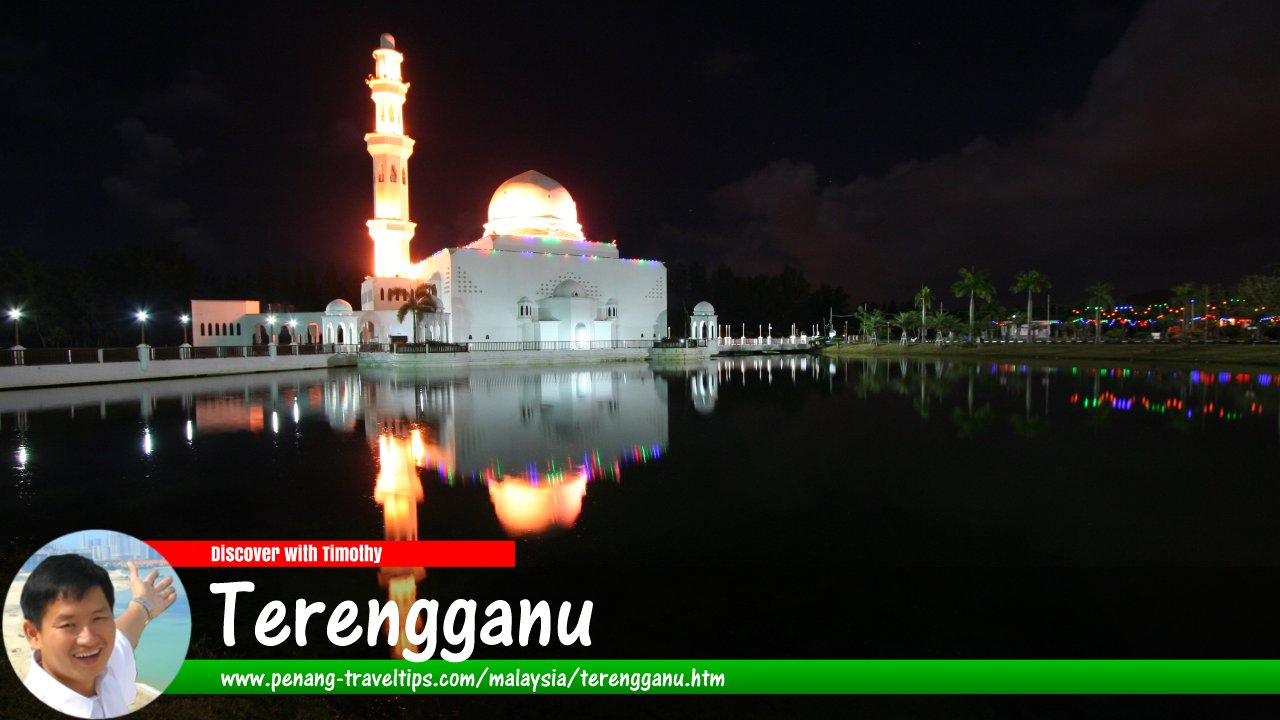 Terengganu (18 February 2011)
Also available: Panduan Melawat Terengganu
Terengganu, proudly known as "Darul Iman" (Abode of Faith), is a breathtaking coastal state on the eastern side of Peninsular Malaysia, renowned for having the longest coastline in the country—spanning over 244 kilometers along the South China Sea.1 Bordered by Kelantan to the north and northwest, Pahang to the south and southwest, and the open expanse of the South China Sea to the east, Terengganu covers a total land area of nearly 13,000 square kilometers.2 Famous worldwide for its postcard-perfect tropical paradise islands such as Redang, Perhentian, and Kapas, Terengganu is equally celebrated as the cultural heartland of traditional Malay heritage. From the centuries-old craftsmanship of wooden boat-building on Duyong Island and hand-drawn songket and batik weaving to the ancient Batu Bersurat (Terengganu Inscription Stone) that marks the early arrival of Islam in Malaysia, Terengganu offers an authentic blend of tropical marine beauty, eco-adventure, and rich cultural traditions for every traveler.
Quick Facts
- State Capital: Kuala Terengganu
- Royal Town: Kuala Terengganu
- Total Land Area: Approximately 12,955 km²
- Coastline Length: 244 kilometers
- Population: Over 1.2 million inhabitants
- Honorific Title: Darul Iman (Abode of Faith)
- Primary Language: Bahasa Malaysia (Terengganu Malay dialect) and English
- Top Attractions: Redang Island, Perhentian Islands, Kapas Island, Crystal Mosque, Kenyir Lake, Islamic Heritage Park, Taman Tamadun Islam, Pasar Payang, Rantau Abang
- Local Delicacies: Nasi Dagang Terengganu, Keropok Lekor, Nasi Kerabu, Satar, Otak-Otak, Laksam, Nekbat
- Primary Gateway: Sultan Mahmud Airport (TGG) in Kuala Terengganu
An Overview of Terengganu
Terengganu occupies a long, narrow strip on the East Coast of Peninsular Malaysia. Its geographic profile transitions gracefully from sandy coastal beaches, coconut groves, and fringing coral reefs to lush lowland dipterocarp rainforests and the massive freshwater expanse of Lake Kenyir in the interior hills.
Historically, Terengganu’s strategic maritime location made it an active trading post along the ancient South China Sea trade routes connecting China, Indochina, and the Malay Archipelago. The discovery of the famous Batu Bersurat Terengganu (Terengganu Inscription Stone) in Kuala Berang, dated to 1303 AD, provided the earliest historical evidence of an established Islamic government utilizing Jawi script in Peninsular Malaysia.3 Throughout the 18th and 19th centuries, Terengganu maintained its sovereignty as a prosperous seafaring sultanate before briefly falling under British protection in 1909 via the Anglo-Siamese Treaty. Today, Terengganu remains a stronghold of authentic Malay culture, traditional arts, and maritime enterprise.
Geography, Climate, and Best Time to Visit
Terengganu experiences a tropical monsoon climate characterized by warm, humid weather throughout the year, with coastal temperatures typically averaging between 24°C and 32°C.
Travelers planning a visit to Terengganu must take close note of the annual monsoon cycle, which heavily influences maritime travel and island resorts:
- Northeast Monsoon (November to March): Brings heavy rains, high sea swells, and strong winds along the East Coast. During this period, marine transportation to islands such as Redang, Perhentian, and Kapas is suspended, and most island resorts close temporarily for safety.
- Dry / Sunny Season (April to October): Characterized by clear skies, calm seas, and excellent underwater visibility. This is the prime season for island vacations, scuba diving, beach getaways, and exploring national parks.
Major Districts and Towns in Terengganu
Terengganu is divided into eight administrative districts: Kuala Terengganu, Kuala Nerus, Marang, Dungun, Kemaman, Besut, Setiu, and Hulu Terengganu.
Kuala Terengganu: The Royal Waterfront Capital
Situated at the mouth of the Terengganu River, Kuala Terengganu is a captivating waterfront city where traditional Malay coastal life coexists with striking modern Islamic architecture.4
Key highlights in Kuala Terengganu include:
- Pasar Payang (Payang Market): The city's famous central market, offering an energetic shopping experience for songket fabrics, hand-printed batik, brassware, fresh local produce, and traditional snacks like keropok lekor.
- Taman Tamadun Islam (Islamic Heritage Park) & Crystal Mosque: Located on Wan Man Island, this park features scale replicas of famous Islamic landmarks from around the world. Its centerpiece is the world-renowned Crystal Mosque (Masjid Kristal), built from steel, glass, and crystal that glows over the riverbank.
- Terengganu State Museum (Muzium Negeri Terengganu): Located in Losong, this is the largest museum complex in Southeast Asia, covering 27 hectares with striking architecture inspired by traditional Terengganu wooden palaces.
- Kampung China (Chinatown): A historic heritage street lined with colorful pre-war shophouses, heritage temples, cozy cafes, and vibrant street art alleys.
- Duyong Island (Pulau Duyong): Famous worldwide for its master shipbuilders who construct wooden yachts and traditional boats using age-old techniques without using written blueprints or metal nails.
Besut: Gateway to the Perhentian Islands
Located at the northern tip of Terengganu bordering Kelantan, Besut is a bustling district best known for the coastal town of Kuala Besut, which serves as the main jetty hub for fast boats heading out to the Perhentian Islands.
Marang and Dungun
Marang is a picturesque coastal district south of the capital, famous for the Marang Jetty (the gateway to Kapas Island) and traditional fishing villages. Further south lies Dungun, a historic coastal town that serves as the entry point to Tanjong Jara and Tenggol Island.
Kemaman: Coastal Delights and Mangroves
Situated in southern Terengganu, Kemaman is famous for its coastal seafood, aromatic local coffee (Kemaman Kopitiam), satar delicacies, and the serene firefly river cruises along the Kemaman River.
Hulu Terengganu: Inland Rainforests and Lake Kenyir
Hulu Terengganu is an inland district dominated by mountains and rainforests. It is home to Kenyir Lake (Tasik Kenyir), the largest man-made lake in Southeast Asia.5
World-Renowned Tropical Islands
Terengganu’s primary international claim to fame is its cluster of pristine islands featuring white coral sand beaches, turquoise waters, and vibrant coral reefs brimming with marine life.
Redang Island (Pulau Redang)
Located inside the Terengganu Marine Park, Redang Island is one of the largest and most luxurious islands off the East Coast.6 Famous for crystal-clear waters, soft powdery beaches like Pasir Panjang, and luxury beach resorts, Redang is a haven for snorkeling, scuba diving, and swimming alongside sea turtles and baby blacktip reef sharks.
Perhentian Islands (Pulau Perhentian)
Consisting of two main islands—Perhentian Besar (Big Perhentian) and Perhentian Kecil (Small Perhentian)—this archipelago is a world-favorite destination for travelers, divers, and backpackers alike.7
- Perhentian Kecil: Known for its lively atmosphere, budget guesthouses, Long Beach night vibes, and affordable diving schools.
- Perhentian Besar: Offers a more relaxed, family-friendly atmosphere with mid-range resorts, tranquil coves, and lush jungle trekking trails connecting hidden beaches.
Kapas Island (Pulau Kapas) and Gemia Island
Located just a 15-minute boat ride from Marang Jetty, Kapas Island is a laid-back, idyllic island favored by day-trippers and travelers seeking peace and quiet. Its calm waters make it an ideal spot for kayak excursions, snorkeling off the shore, and relaxing in hammocks under swaying coconut palms.
Tenggol Island (Pulau Tenggol)
Situated further offshore from Dungun, Tenggol Island is a rugged, forested island famous among experienced scuba divers for its deep wall dives, healthy hard coral gardens, and seasonal sightings of majestic whale sharks between August and October.
Inland Eco-Tourism: Lake Kenyir
Spanning over 260 square kilometers, Lake Kenyir was formed in 1985 by the damming of the Kenyir River. Today, it has transformed into a massive freshwater eco-tourism destination containing over 340 forested islands (which were once mountain peaks), 14 waterfalls, and ancient cave networks.8
Highlights of Lake Kenyir include:
- Houseboat Cruises: Renting traditional multi-room wooden houseboats to cruise the tranquil lake waters, complete with onboard cooking facilities and fishing decks.
- Kenyir Elephant Conservation Village (KECV): A protected sanctuary dedicated to caring for rescued wild elephants while educating visitors on Asian elephant conservation.
- Waterfalls and Caves: Popular natural sites such as Lasir Waterfall, Sekayu Waterfall, and Bewah Cave—where prehistoric human remains dating back over 16,000 years were unearthed.
Traditional Arts, Culture, and Heritage
Terengganu takes immense pride in safeguarding age-old Malay craftsmanship and cultural traditions that have been passed down through generations.
Traditional Craftsmanship
- Songket Weaving: Terengganu is renowned as the primary producer of high-grade Songket—a luxurious hand-woven fabric interwoven with gold and silver metallic threads, traditionally worn during royal ceremonies, Malay weddings, and festive occasions.
- Batik Printing: Terengganu batik is celebrated for its hand-drawn floral motifs, vibrant dye colors, and intricate block-printing techniques on fine silk and cotton.
- Master Boat-Building: On Duyong Island in Kuala Terengganu, traditional craftsmen continue to build magnificent wooden ocean vessels using heritage techniques, fitting chengai hardwood planks without using technical drawings or nails.
- Brassware and Woodcarving: Intricate brass utensils, royal betel-nut sets (tepak sirih), and hand-carved floral wooden panels showcase the artistic skills of Terengganu artisans.
Terengganu’s Rich Culinary Heritage
Terengganu’s cuisine is a flavor-filled celebration of fresh seafood, coconut milk, aromatic herbs, and distinct local rice dishes.
Must-Try Local Dishes
- Nasi Dagang Terengganu: The state's signature breakfast dish, featuring a blend of fragrant white rice and wild red rice steamed in coconut milk and fenugreek seeds, served alongside a rich, flavorful tuna fish curry (Gulai Ikan Tongkol), hard-boiled eggs, and pickled cucumber.
- Keropok Lekor: Terengganu's most famous snack, made from minced fresh fish flesh (such as herring or mackerel) blended with sago flour and salt, shaped into rolls, and served either boiled or deep-fried until crispy, dipped in a spicy sweet chili sauce.
- Satar: A savory mixture of minced fish flesh, grated coconut, shallots, ginger, and chili, wrapped into triangular banana leaf parcels and grilled over charcoal.
- Laksam: Thick, rolled flat rice noodles served in a creamy, mild white gravy made from boiled fish flesh, coconut milk, lemongrass, and ginger, garnished with chopped fresh herbs and sambal.
- Nasi Kerabu: Fragrant blue rice (tinted naturally using butterfly pea flowers) served with fresh raw jungle ulam herbs, fish crackers, salted egg, solok lada (stuffed chili), and grilled fish or chicken.
- Nekbat: A traditional dessert made from rice flour and egg batter, baked into small light molds and soaked in a sweet pandan-infused sugar syrup, particularly popular during the holy month of Ramadan.
Getting to and Around Terengganu
Terengganu is easily accessible by air, express bus, and private vehicle via Peninsular Malaysia's East Coast transportation network.
By Air
Sultan Mahmud Airport (TGG) in Kuala Terengganu is the main airport, handling frequent daily flights from Kuala Lumpur (KLIA and Subang Airports) operated by Malaysia Airlines, AirAsia, and Firefly.
By Road
The East Coast Expressway Phase 2 (LPT2) connects Kuala Lumpur directly to Kuala Terengganu in approximately 4 to 5 hours. Long-distance express buses operate daily from major cities including Kuala Lumpur, Penang, and Johor Bahru to terminals in Kuala Terengganu, Dungun, and Kuala Besut.
Conclusion
From the powdery white beaches and turquoise waters of Redang and Perhentian to the regal heritage of Kuala Terengganu and the culinary delight of fresh keropok lekor, Terengganu stands as a quintessential gem of Malaysia’s East Coast. Its rich Malay traditions, warm hospitality, and untamed natural beauty ensure an unforgettable journey for every traveler.
Map of towns in Terengganu
List of Towns in Terengganu
- Kuala Terengganu - state capital (GPS: 5.33369, 103.14033)

- Ajil (GPS: 5.08342, 103.08574)

- Bandar Al-Muktafi Billah Shah (GPS: 4.62014, 103.20599)

- Bandar Ketengah Jaya (GPS: 4.57512, 103.30418)

- Bandar Permaisuri (GPS: 5.51626, 102.75781)

- Batu Rakit (GPS: 5.4405, 103.02399)

- Bukit Besi (GPS: 4.74957, 103.19183)

- Bukit Payong (GPS: 5.23387, 103.10256)

- Chukai (GPS: 4.23017, 103.42589)

- Jerteh (GPS: 5.73829, 102.50106)

- Jongok Batu (GPS: 4.6751, 103.05291)

- Kerteh (GPS: 4.50729, 103.44039)

- Kijal (GPS: 4.33614, 103.48176)

- Kuala Berang (GPS: 5.07435, 103.01021)

- Kuala Besut (GPS: 5.83017, 102.56423)

- Kuala Dungun (GPS: 4.75367, 103.41945)

- Marang (GPS: 5.20583, 103.20487)

- Merang (GPS: 5.53226, 102.95079)

- Merchang (GPS: 5.04503, 103.29088)

- Paka (GPS: 4.62655, 103.43799)

- Rasau Kerteh (GPS: 4.57516, 103.3259)

- Rusila (GPS: 5.24199, 103.18548)
- Seberang Takir (GPS: 5.34724, 103.12952)

- Teluk Kalong (GPS: 4.28555, 103.47636)

- Wakaf Tapai (GPS: 5.14189, 103.08493)

Tourist Attractions in Terengganu
- Bakau Tinggi Recreational Park (GPS: 4.25346, 103.42288)

- Bukit Keluang (GPS: 5.80216, 102.60567)

- Chemerung Waterfall (GPS: 4.65889, 102.98829)

- Hutan Simpan Gunung Tebu (GPS: 5.59172, 102.61316)

- Kampung Kuala Abang Rock Formations (GPS: 4.82759, 103.41686)

- Kemasik Beach (GPS: 4.41763, 103.45804)

- Kenyir Lake (GPS: 5.01433, 102.83889)

- La Hot Spring (GPS: 5.51681, 102.53519)

- Lata Tembakah (GPS: 5.58616, 102.4498)

- Rantau Abang (GPS: 4.85995, 103.39641)

- Sekayu Waterfall (GPS: 4.96632, 102.95506)

- Tanjung Jara (GPS: 4.80773, 103.42443)

- Yak Yah Firefly Sanctuary (GPS: 4.30672, 103.37444)

Category of sights in Terengganu
- TOWNS IN TERENGGANU
- Beaches in Terengganu
- Bridges in Terengganu
- Chinese temples in Terengganu
- Historic buildings in Terengganu
- Historic Sites in Terengganu
- Homestays in Terengganu
- Islands in Terengganu
- Mosques in Terengganu
- Museums in Terengganu
- Palaces in Terengganu
- Parks in Terengganu
- Restaurants in Terengganu
- Rivers in Terengganu
- Stadiums in Terengganu
- Waterfront Promenades in Terengganu
Districts of Terengganu
References
- Terengganu State Government Official Portal. https://www.terengganu.gov.my
- Department of Statistics Malaysia (DOSM) - Terengganu State Profile. https://www.dosm.gov.my
- Terengganu State Museum Board - History of Batu Bersurat. https://muzium.terengganu.gov.my
- Kuala Terengganu City Council (Majlis Bandaraya Kuala Terengganu - MBKT). https://mbkt.terengganu.gov.my
- Central Terengganu Development Authority (KETENGAH) - Lake Kenyir. https://www.ketengah.gov.my
- Department of Fisheries Malaysia - Terengganu Marine Parks (Redang & Perhentian). https://www.dof.gov.my
- Tourism Malaysia Official Portal - Terengganu Destination Guide. https://www.malaysia.travel
- Terengganu Tourism Department Official Portal. https://tourism.terengganu.gov.my
Page Details
This page was created on 28 July 2026. Hi, my name is Timothy and created it from my research, for my own entertainment, knowledge and to satisfy my curiosity. I am providing the information to you in good faith and hope it is useful. I try to get the details as accurate as possible. I also try to update the page whenever I stumble on new details. So this and all my other pages are perpetual work in progress. If you discover any error, please politely inform me, pointing out where the error lies, and I will correct it as soon as possible. Your helpfulness will keep this page accurate, relevant and helpful to those who need the information.My Videos of Malaysia
 Latest Pages & Updates
Buy Me A Coffee
If you enjoy the information I provide and want to support the work I do, please buy me a coffee! I appreciate it immensely, thank you so much!
