
Sabah
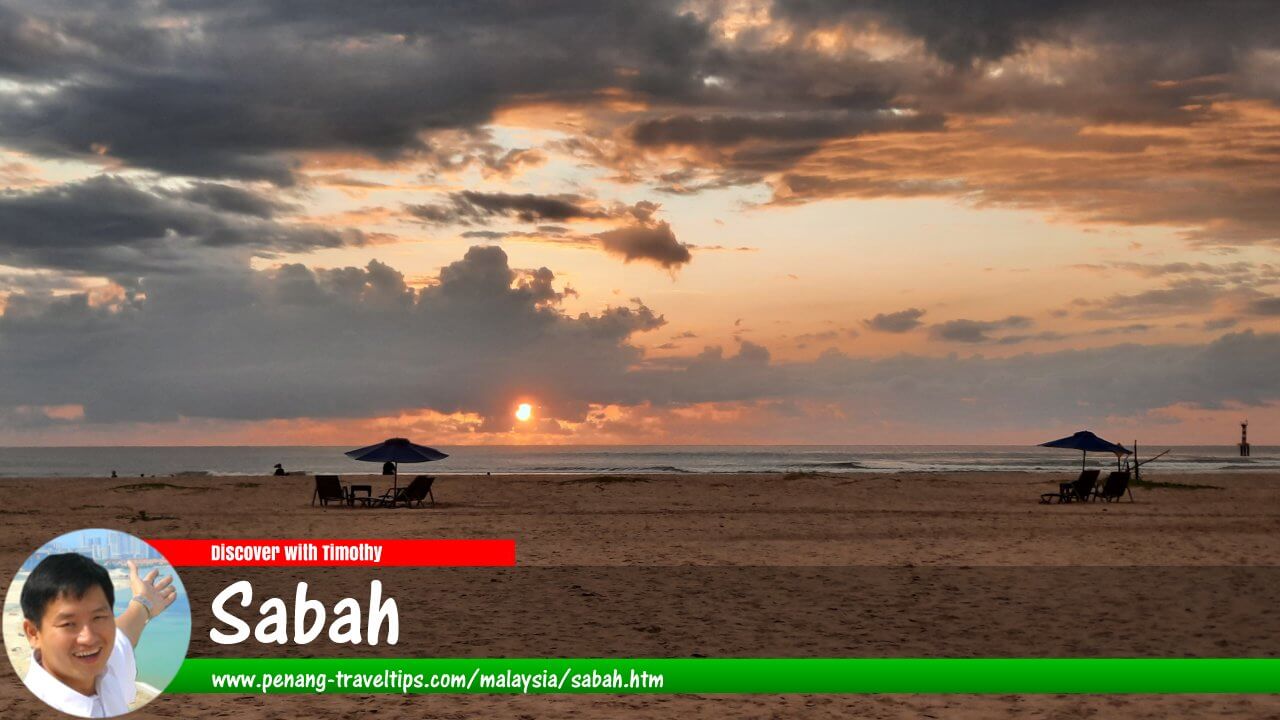 Sabah (4 May 2022)
Also available: Panduan Melawat Sabah
Sabah, affectionately known as the "Land Below the Wind" due to its location just south of the typhoon belt, is the second-largest state in Malaysia and one of the most ecologically diverse regions on Planet Earth. Situated on the northern portion of the island of Borneo, Sabah spans an area of over 73,000 square kilometers, bordered by Sarawak to the southwest, the Indonesian province of North Kalimantan to the south, the South China Sea to the west, and the Sulu and Celebes Seas to the east.1 Famous for its towering UNESCO World Heritage peak, 4,095-meter Mount Kinabalu, the state is home to millennia-old primary rainforests, pristine coral reefs, rare endemic wildlife like the proboscis monkey and Bornean orangutan, and a vibrant cultural tapestry composed of more than 30 distinct indigenous ethnic groups.2 Whether exploring world-class scuba diving sites off Sipadan Island, cruising down the wildlife-rich Kinabatangan River, or immersing in ethnic heritage, Sabah offers an unrivaled adventure destination for both domestic visitors and foreign travelers.
Quick Facts
- State Capital: Kota Kinabalu (formerly Jesselton)
- Total Land Area: Approximately 73,904 km²
- Population: Over 3.4 million inhabitants
- Highest Peak: Mount Kinabalu (4,095.2 meters)
- State Motto: "Sabah Maju Jaya" (Sabah Prosperous and Successful)
- Major Ethnic Groups: Kadazan-Dusun, Bajau, Murut, Chinese, Malay, Rungus, Bisaya, Lun Bawang
- Primary Languages: Bahasa Malaysia, English, Kadazandusun, Bajau, Hakka, Cantonese
- Top Attractions: Kinabalu Park, Sipadan Island, Sepilok Orangutan Rehabilitation Centre, Kinabatangan River, Danum Valley Conservation Area, Tunku Abdul Rahman Marine Park
- Local Delicacies: Tuaran Nmee, Beaufort Mee, Hinava (kadazan raw fish salad), Beaufort Oranges, Sayur Sabah (Sabah Veggie), Latok (sea grapes)
- Primary Gateways: Kota Kinabalu International Airport (BKI), Tawau Airport (TWU), Sandakan Airport (SDK)
An Overview of Sabah
Sabah occupies a strategic and breathtaking position on the tropical island of Borneo. Its landscape dramatically transitions from white-sand beaches and turquoise coral islands to sprawling low-elevation river basins, dense dipterocarp rainforests, and granite mountain peaks that pierce the clouds. The geography has historically protected its vast inland ecosystems while fostering maritime trading communities along its extensive coastline.
Historically known as North Borneo under British rule, the territory was managed by the British North Borneo Chartered Company from 1881 until World War II, after which it became a British Crown Colony.3 On September 16, 1963, Sabah joined the Federation of Malaya, Sarawak, and Singapore to form modern Malaysia. Today, Sabah retains special autonomous privileges within Malaysia, particularly regarding immigration control, land administration, and forestry preservation, allowing it to maintain strict eco-tourism and environmental conservation mandates across its national parks and marine reserves.
Geography and Climate
Sabah enjoys a warm, humid tropical rainforest climate throughout the year, with coastal temperatures averaging between 27°C and 32°C. In contrast, highland regions such as Kundasang and Ranau experience cool mountain weather, where temperatures drop down to 12°C–18°C at night and colder near the summit of Mount Kinabalu.
While rain can fall at any time in Borneo, the state experiences two primary monsoon seasons:
- Northeast Monsoon (November to March): Brings heavier rainfall, particularly along the northern and eastern coasts and maritime zones.
- Southwest Monsoon (May to September): Generally brings drier and warmer conditions across the state.
For outdoor adventurers, mountain climbers, and scuba divers, the months between April and October generally offer the driest conditions and best underwater visibility, though eco-tourism activities operate year-round.
Major Regions and Towns in Sabah
Sabah is divided into five administrative divisions: West Coast, Interior, Kudat, Sandakan, and Tawau. Each region offers distinct landscapes, cultural roots, and travel itineraries.
Kota Kinabalu: The Coastal Gateway Capital
Kota Kinabalu (KK), formerly known as Jesselton, is the bustling capital of Sabah and the principal international gateway to East Malaysia.4 Nestled between the Crocker Range mountains and the South China Sea, KK is a dynamic seaside city famous for its dramatic sunsets, fresh seafood markets, and laid-back lifestyle.
Key highlights in and around Kota Kinabalu include:
- Kota Kinabalu Waterfront and Night Market: A bustling evening district packed with open-air dining venues, local handicraft markets, and bustling fresh seafood stalls.
- Tunku Abdul Rahman Marine Park: A collection of five stunning islands (Gaya, Manukan, Sapi, Mamutik, and Sulug) located just a 15-minute speed boat ride from the city center, offering excellent snorkeling, beach outings, and watersports.
- Kota Kinabalu City Mosque: Often referred to as the "Floating Mosque" due to its lagoon setting, showcasing modern Islamic architecture.
- Mari Mari Cultural Village: Located in the lush forest outer skirts of KK, offering immersive cultural showcases of traditional houses, headhunting history, blowpipe shooting, and food preparation of Sabah's primary indigenous tribes.
Sandakan: Nature Capital of Borneo
Located on the eastern coast of Sabah, Sandakan was the historic capital of British North Borneo until 1946. Today, Sandakan serves as the primary stepping stone for nature, wildlife, and conservation travel.5 The town itself retains historical charm with sites like the Agnes Keith House, St. Michael’s and All Angels Church, and the Sandakan Memorial Park, which commemorates Australian and British prisoners of war who perished during the World War II Sandakan Death Marches.
Tawau and Semporna: Gateway to World-Class Reefs
Located in southeastern Sabah, Tawau is the state's third-largest town, famous for its cocoa plantations, seafood, and proximity to Tawau Hills Park. Just north of Tawau lies Semporna, a coastal town that serves as the springboard to the islands of the Celebes Sea, including world-famous diving destinations such as Sipadan, Mabul, and Kapalai.
Kudat: The Northern Tip of Borneo
Situated at the northernmost point of Sabah, Kudat is the cultural homeland of the Rungus people, a sub-group of the Kadazan-Dusun famous for longhouse communal living and traditional beadwork. The main attraction is Tanjung Simpang Mengayau (The Tip of Borneo), where the South China Sea meets the Sulu Sea over dramatic coastal cliffs and golden sandy beaches.
Natural Wonders and Biodiversity Preservation
Sabah is recognized globally as an ecological hotspot. Centuries of preservation efforts have protected ancient virgin rainforests and rich marine habitats that harbor some of the rarest wildlife on the planet.
Kinabalu Park and Mount Kinabalu
Designated as Malaysia’s first UNESCO World Heritage Site in 2000, Kinabalu Park covers 754 square kilometers surrounding Mount Kinabalu.6 The park is one of the most important biological sites in the world, holding more than 5,000 plant species (including hundreds of endemic orchids and carnivorous pitcher plants), 326 bird species, and 100 mammal species.
Mount Kinabalu (4,095.2 meters) attracts thousands of hikers annually. The summit climb requires no specialized mountaineering equipment, taking most hikers two days with an overnight stay at Panalaban base camp before making the final dawn push to Low's Peak for sunrise over Borneo. Nearby, the highland town of Kundasang offers rolling green tea gardens, dairy farms, and temperate vegetable valleys.
Kinabatangan River Wildlife Sanctuary
Flowing 560 kilometers from the interior mountains to the Sulu Sea, the Kinabatangan River is Sabah's longest river.7 The lower Kinabatangan floodplain features one of the highest concentrations of wildlife in Southeast Asia. Guided river cruises from villages like Sukau and Bilit offer travelers reliable opportunities to spot wild Borneo pygmy elephants, proboscis monkeys, orangutans, hornbills, estuarine crocodiles, and rare river birds in their natural habitats.
Sepilok and Labuk Bay Conservation Centers
Near Sandakan, several world-class rehabilitation centers dedicated to protecting Borneo's iconic fauna open their doors to visitors:
- Sepilok Orangutan Rehabilitation Centre: Established in 1964, this world-renowned sanctuary rescue orphaned and injured orangutans, teaching them wild survival skills in a protected forest reserve before returning them to the jungle.
- Bornean Sun Bear Conservation Centre (BSBCC): Located adjacent to Sepilok, this sanctuary rehabilitates the world's smallest bear species—the sun bear—raising public awareness about tropical forest preservation.
- Labuk Bay Proboscis Monkey Sanctuary: A privately managed sanctuary within a mangrove forest where visitors can observe the unique big-nosed, pot-bellied proboscis monkeys up close.
Danum Valley and Maliau Basin
For pristine wilderness exploration, Danum Valley Conservation Area represents 438 square kilometers of undisturbed lowland dipterocarp forest that has existed virtually untouched for millions of years.8 It features world-renowned research facilities, luxury eco-lodges, canopy walks, and opportunities to spot elusive wildlife like cloud leopards and Bornean gibbons. Nearby lies the mysterious Maliau Basin, often referred to as "Sabah's Lost World," a self-contained circular amphitheater of virgin jungle surrounded by sheer cliff walls.
Islands, Beaches, and Scuba Diving
With thousands of kilometers of coastline facing three seas, Sabah boasts some of the world's finest tropical islands and marine bio-reserves.
Sipadan Island (Pulau Sipadan)
Formed by living corals growing atop an extinct undersea volcanic cone rising 600 meters from the ocean floor, Sipadan is universally ranked among the top scuba diving sites on Earth.9 Made famous by oceanographer Jacques Cousteau, Sipadan's waters host huge schools of barracuda, green and hawksbill sea turtles, bumphead parrotfish, reef sharks, and dramatic vertical wall drop-offs. To preserve its delicate marine ecosystem, no overnight stays are permitted on the island, and visitor permits are strictly capped daily.
Mabul, Kapalai, and Mataking
Surrounding Sipadan are several satellite resort islands that offer world-class diving and luxury overwater villa accommodations:
- Mabul Island: World-famous for macro diving and muck diving, holding rare creatures such as blue-ringed octopuses, flamboyant cuttlefish, and frogfish.
- Kapalai Island: A sandbar transformed into a luxury water-bungalow resort perched directly over coral shoals.
- Tun Sakaran Marine Park: A cluster of eight islands near Semporna featuring extinct volcanic craters, turquoise lagoons, and the iconic view from Bohey Dulang Peak.
Indigenous Culture, Heritage, and Festivals
Sabah's human story is defined by its remarkable multi-ethnic harmony. Over 30 ethnic groups coexist in the state, each preserving unique dialects, oral folklore, traditional attire, music, and ceremonial customs.
Indigenous Peoples of Sabah
- Kadazan-Dusun: The largest ethnic group in Sabah, traditionally agriculturalists famous for wet-paddy farming, bamboo crafts, and rice wine production (tapai and Lihing).
- Bajau: Divided into two distinct groups—the Bajau Laut (Sea Gypsies) of the eastern coasts who live nomadic lives on boats, and the Bajau Samah of Kota Belud, renowned as skilled horsemen (the "Cowboys of the East").
- Murut: Historically legendary forest dwellers and warriors from interior Sabah, skilled in blowpipe hunting and bamboo dance forms like the Magunatip.
- Rungus: Coastal inhabitants of the Kudat Peninsula known for maintaining traditional longhouses and intricate beadwork patterns.
Kaamatan (Harvest Festival)
The most important cultural event in Sabah is Kaamatan, the traditional harvest festival celebrated throughout the month of May by the Kadazan-Dusun and Murut communities.10 The festival expresses gratitude to the rice spirits (Bambaazon) for a bountiful harvest. Celebrations feature traditional music played on bamboo instruments and gongs, cultural sports, free-flowing rice wine, and the crowning of the Unduk Ngadau (harvest queen beauty pageant) during the grand finale at the Hongkod Koisaan hall in Penampang on May 30 and 31.
Sabahan Culinary Delights
Sabah's food culture is a flavor-packed blend of fresh marine catches, jungle herbs, traditional fermented delicacies, and Chinese-Bornean noodle traditions.
Must-Try Local Foods
- Hinava: The most famous traditional Kadazan-Dusun dish, consisting of fresh raw mackerel or mackerel-prawn flesh cured in lime juice, tossed with sliced shallots, ginger, chili, and grated dried bambangan seed.
- Tuaran Mee: Handmade egg noodles fried to a crispy turn before being stir-fried with egg, pork slices, roasted char siu, and local green vegetables, originating from Tuaran town.
- Beaufort Mee: Silky yellow noodles wok-charred and served swimming in a thick, savory gravy made with local choy sum greens and marinated sliced pork.
- Sayur Sabah (Sabah Veggie / Cekur Manis): A local wild green vegetable fried with garlic, belacan (shrimp paste), or egg, famous for its crisp stem texture and sweet flavor.
- Latok: Fresh sea grapes harvested by the Bajau community, eaten raw with lime, chili, and belacan dipping sauces.
- Fresh Seafood: From giant tiger prawns and mud crabs to grouper and red snapper, Sabah's ocean-side markets serve affordable, high-quality seafood cooked to order.
Getting to and Around Sabah
Sabah's modern infrastructure makes travel between major coastal hubs straightforward, while inland journeys provide scenic drives through mountain ranges.
By Air
Kota Kinabalu International Airport (BKI) is the primary entry point, handling frequent direct domestic flights from Kuala Lumpur, Penang, Johor Bahru, and Sarawak, as well as direct international flights from regional hubs including Singapore, Seoul, Taipei, Guangzhou, and Hong Kong. Secondary domestic airports operate in Sandakan, Tawau, Lahad Datu, and Kudat.
By Road
The Pan-Borneo Highway links Kota Kinabalu to Sandakan, Tawau, and neighboring Sarawak. Long-distance express buses, rental vehicles, and private drivers connect major towns across the mountain passes, though travel through mountainous terrain requires attentive driving.
Conclusion
From the cloud-capped summit of Mount Kinabalu to the ancient biological depths of Danum Valley and the vibrant coral walls of Sipadan, Sabah is a crown jewel of tropical nature, biodiversity, and human heritage. Its warm hospitality, rich tribal traditions, and wild landscapes ensure every visitor leaves with unforgettable Bornean memories.
References
- Sabah State Government Official Portal. https://www.sabah.gov.my
- Department of Statistics Malaysia (DOSM) - Sabah State Profile. https://www.dosm.gov.my
- National Archives of Malaysia - History of North Borneo. https://www.arkib.gov.my
- Kota Kinabalu City Hall (Dewan Bandaraya Kota Kinabalu). https://dbkk.sabah.gov.my
- Sandakan Municipal Council (Majlis Perbandaran Sandakan). https://mps.sabah.gov.my
- UNESCO World Heritage Centre - Kinabalu Park. https://whc.unesco.org/en/list/1012/
- Sabah Wildlife Department - Kinabatangan Sanctuary. https://wildlife.sabah.gov.my
- Danum Valley Management Committee & Yayasan Sabah Group. https://www.yayasansabah.org.my
- Sabah Parks (Taman-Taman Sabah) - Sipadan Island Marine Reserve. https://www.sabahparks.org.my
- Sabah Tourism Board Official Portal. https://www.sabahtourism.com
Page Details
This page was created on 28 July 2026. Hi, my name is Timothy and created it from my research, for my own entertainment, knowledge and to satisfy my curiosity. I am providing the information to you in good faith and hope it is useful. I try to get the details as accurate as possible. I also try to update the page whenever I stumble on new details. So this and all my other pages are perpetual work in progress. If you discover any error, please politely inform me, pointing out where the error lies, and I will correct it as soon as possible. Your helpfulness will keep this page accurate, relevant and helpful to those who need the information.My Videos of Malaysia
 Latest Pages & Updates
Buy Me A Coffee
If you enjoy the information I provide and want to support the work I do, please buy me a coffee! I appreciate it immensely, thank you so much!
