
Putrajaya Travel Guide
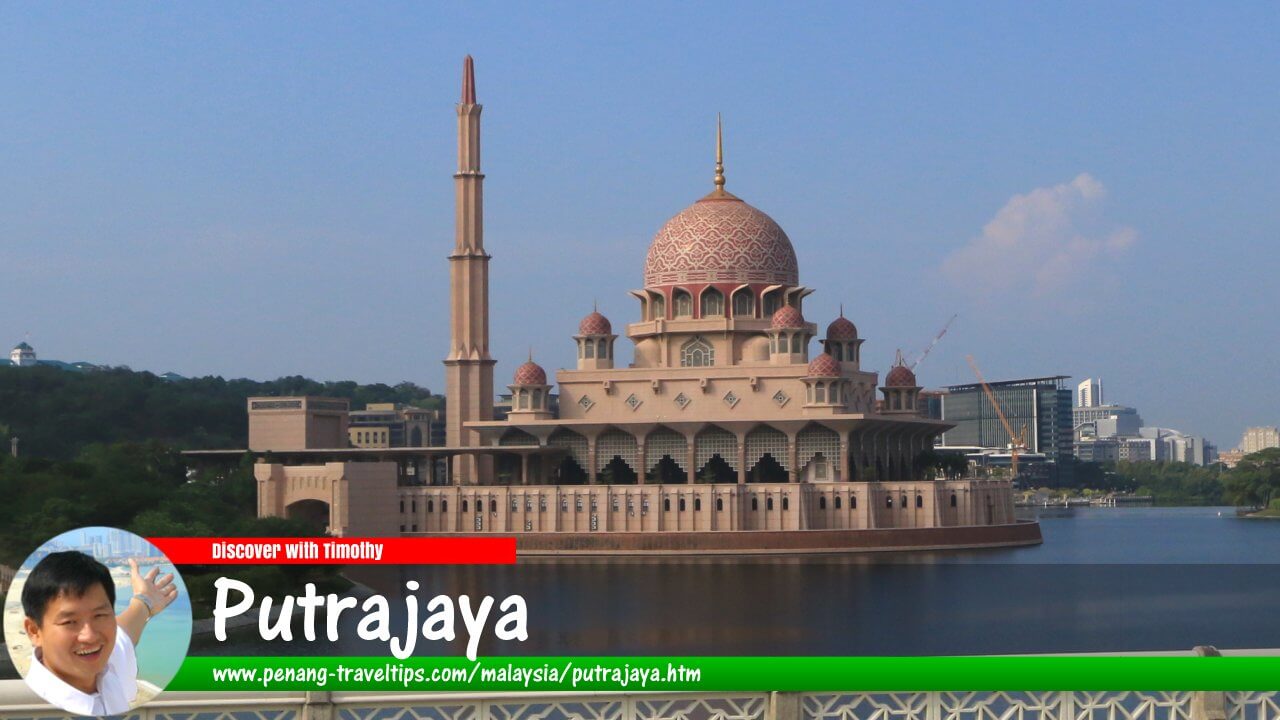 Putrajaya (9 July 2016)
Also available: Panduan Melawat Putrajaya
Putrajaya is the meticulously planned administrative capital of Malaysia, serving as the seat of the federal government and the nation's premier showcase of modern urban planning, Islamic architecture, and sustainable eco-city design. Situated approximately 25 kilometers south of Kuala Lumpur and 20 kilometers north of Kuala Lumpur International Airport (KLIA), Putrajaya was established in 1995 under the visionary leadership of Prime Minister Tun Dr. Mahathir Mohamad to relieve congestion in Kuala Lumpur and centralize federal administrative operations.1 Spanning an area of nearly 49 square kilometers, the federal territory was carved out of former oil palm and rubber plantations in Prang Besar, Selangor, and named in honor of Malaysia's first Prime Minister, Tunku Abdul Rahman Putra Al-Haj.2 Defined by its vast man-made lake, grand ornamental bridges, majestic government complexes, and sprawling botanical gardens, Putrajaya stands today as a world-class example of a "Garden Intelligent City" that seamlessly merges modern governance, heritage architecture, and green urban sanctuary for both local visitors and international travelers.
Quick Facts
- Administrative Status: Federal Territory of Malaysia (Wilayah Persekutuan Putrajaya)
- Established: 19 October 1995
- Declared Federal Territory: 1 February 2001
- Total Land Area: 49.31 km² (4,931 hectares)
- Population: Approximately 120,000 inhabitants
- City Concept: Intelligent Garden City (60% green and blue spaces)
- Key Landforms: Putrajaya Lake (650-hectare artificial lake), 12 public parks
- Top Attractions: Perdana Putra, Putra Mosque, Iron Mosque, Seri Wawasan Bridge, Putrajaya Botanical Garden, Millennium Monument
- Primary Transit Links: KLIA Transit (Express Rail Link), MRT Putrajaya Line (PY34), Maju Expressway (MEX)
An Overview of Putrajaya
Putrajaya represents one of the most ambitious megaprojects in Southeast Asian history. Conceived in the early 1990s, the master plan aimed to create an ultra-modern city where technology, government administration, and natural landscape coexist in total harmony. The layout is dominated by a central 650-hectare man-made body of water—Putrajaya Lake—around which the city's 20 designated precincts are organized.3 The lake acts as a natural cooling system for the city while providing wetlands, recreational watersports avenues, and breathtaking waterfront vistas.
Central to the city's master layout is the 4.2-kilometer-long Persiaran Perdana, a grand boulevard modeled after classic ceremonial avenues such as the Champs-Élysées in Paris and the National Mall in Washington, D.C. This central spine hosts national events, including Malaysia's National Day parade, and connects key civic institutions from the Prime Minister's Office in the north to the International Convention Centre in the south.
Geography and Urban Planning Concept
Unlike organic cities that developed along trade routes over centuries, Putrajaya was designed from a blank slate with sustainability, efficiency, and aesthetic beauty embedded into its core. Nearly 40% of the city's total land area is dedicated exclusively to green parks, wetlands, open reserves, and botanical sanctuaries, earning it international recognition as a pioneer in sustainable urban forestry.4
The city's urban framework is built upon the dual philosophy of "City in a Garden" and "Intelligent City." Advanced underground telecommunication corridors, smart traffic management systems, and eco-friendly municipal waste systems were integrated into the infrastructure prior to constructing major buildings. The climate in Putrajaya is tropical rainforest, with high year-round temperatures between 28°C and 33°C and frequent late-afternoon thunderstorms that keep the city's expansive gardens vibrant and green throughout the year.
Architectural Marvels and Major Landmarks
Putrajaya is world-renowned for its eclectic architectural landscape, which fuses classical Islamic design motifs from Persia, Arabia, and Moorish Spain with contemporary modernism and traditional Malay structural heritage.
Perdana Putra (Prime Minister's Office Complex)
Perdana Putra is the administrative heart of the Malaysian government, housing the offices of the Prime Minister, the Deputy Prime Minister, and the Cabinet Secretariat. Perched atop Main Hill (Bukit Awan) overlooking Putrajaya Lake, this imposing six-story complex is constructed from natural stone and features a signature onion-shaped green glazed ceramic dome flanked by smaller side domes. Its design blends Islamic-Moorish architecture with traditional Malay woodwork motifs, symbolizing statecraft, authority, and cultural pride.5
Putra Mosque (Masjid Putra)
Located adjacent to Perdana Putra on the edge of the lake, the Putra Mosque is perhaps Putrajaya's most recognizable landmark. Built with rose-tinted granite, the mosque features a striking 116-meter-high minaret—one of the tallest in the region—and a magnificent main dome that can accommodate up to 15,000 worshippers at once.6 The architecture draws inspiration from the Sheikh Omar Mosque in Baghdad and Persian Safavid design, featuring a expansive courtyard (Sahn) and intricate calligraphy etched along its internal prayer hall.
Tuanku Mizan Zainal Abidin Mosque (Iron Mosque)
Located in Precinct 3 opposite the Palace of Justice, the Tuanku Mizan Zainal Abidin Mosque—popularly known as the Iron Mosque—presents a stark, ultra-modern architectural contrast to the pink-granite Putra Mosque. Constructed using 70% high-grade steel, the mosque features a transparent structural design with no traditional minaret, relying instead on wire mesh screen technology imported from Germany to allow natural wind currents to flow freely through the prayer hall, eliminating the need for air conditioning.
Palace of Justice (Istana Kehakiman)
The Palace of Justice is an impressive majestic complex housing the Court of Appeal and the Federal Court of Malaysia. Its dramatic design incorporates elements from the Taj Mahal in India, featuring a grand central dome flanked by four smaller domes and classical Islamic arches. The spacious open plaza in front of the building frequently hosts national celebrations and civic gatherings.
Istana Melawati and Istana Darul Ehsan
Putrajaya is home to two royal palaces. Istana Melawati serves as the official retreat for His Majesty the Yang di-Pertuan Agong (King of Malaysia) during official government stays in the administrative capital. Istana Darul Ehsan is a grand Tudor-style palace situated along the lake, serving as the official residence for the Sultan of Selangor when visiting Putrajaya.
Bridges of Putrajaya
Because Putrajaya Lake divides much of the administrative city from its commercial and residential precincts, a network of iconic, architecturally distinct bridges was built across the water. Each bridge was intentionally designed to reflect different historical and global architectural styles:
- Seri Wawasan Bridge: A futuristic cable-stayed bridge designed in the shape of a sailing ship. Featuring a 75-meter inclined pylon with concrete stay cables illuminated by dynamic LED lights at night, it is a favorite subject for photography enthusiasts.
- Seri Perdana Bridge: A 370-meter-long bridge designed in classical Moorish style, featuring delicate yellow-tiled viewing pavilions mounted along its piers. It connects Precinct 1 with Precinct 16.
- Putra Bridge: Modeled after the famous Khaju Bridge in Isfahan, Iran, this two-tier concrete bridge features lower levels housing fine dining restaurants and waterfront viewing decks while carrying main vehicular traffic above.
- Seri Saujana Bridge: A state-of-the-art single-plane cable-stayed arch bridge, representing modern structural engineering and connecting the main island to Precinct 7.
- Seri Gemilang Bridge: A magnificent ceremonial bridge inspired by classical European architecture, featuring ornate gold-leaf lampposts and granite balustrades leading toward the Putrajaya International Convention Centre.
Parks, Nature, and Eco-Tourism
True to its "Garden City" mandate, Putrajaya contains some of the largest, most thoughtfully landscaped public parks in Malaysia, offering sanctuary for native wildlife and recreational space for residents and tourists alike.
Putrajaya Botanical Garden (Taman Botani)
Spanning over 92 hectares in Precinct 1, the Putrajaya Botanical Garden is the largest botanical sanctuary in Peninsular Malaysia.7 The park is divided into five distinct botanical themes: Explorer's Trail, Palm Hill, Floral Gardens, Sun Garden, and Lakeside. It features more than 700 species of tropical plants, a canopy walk, a Moroccan Pavilion (Astaka Morocco) displaying authentic North African artisanal tilework, and extensive cycling paths.
Taman Wetland (Putrajaya Wetlands)
Recognized as the largest man-made freshwater wetland in the tropics, Taman Wetland covers 138 hectares and plays a vital ecological role as the natural biological filter for Putrajaya Lake.8 The park includes a nature interpretation center, a bird-watching tower, and boardwalks through marshlands that house over 100 species of migratory and local birds, pink flamingos, and river fish species.
Taman Warisan Pertanian (Agricultural Heritage Park)
Located in Precinct 16, this living outdoor museum showcases Malaysia's traditional agricultural heritage. Visitors can observe live commercial crops such as rubber, palm oil, cocoa, tea, fruit trees, and traditional spices, alongside demonstrations of natural rubber tapping and latex processing.
Taman Saujana Hijau
Situated on a high ridge in Precinct 11, Taman Saujana Hijau offers a distinctly different pine-forested landscape reminiscent of European hills. The park features rolling lawns, cypress trees, rose gardens, and three designated zones (European Garden, Oriental Garden, and English Garden) that are hugely popular for morning jogs and weekend picnics.
Culture, Events, and Recreation
While Putrajaya functions primarily as the administrative capital of Malaysia, it has evolved into a vibrant hub for leisure, international sporting events, and cultural festivals.
Putrajaya Lake Cruise
One of the best ways to experience the city's architectural grandeur is from the water. Cruise Tasik Putrajaya operates regular sightseeing tours across the lake using traditional handmade Malay wooden boats (dondang sayang) or climate-controlled passenger catamarans, offering spectacular unobstructed views of Perdana Putra, Putra Mosque, and the city's iconic bridges.
International Events and Festivals
Putrajaya hosts several high-profile national and international gatherings throughout the year, including:
- National Day Parade (Merdeka Parade): On August 31st, Persiaran Perdana turns into a grand parade ground hosting royal processions, military marches, and cultural performances before thousands of spectators.
- Putrajaya Royal Floria (Floria Diraja Putrajaya): An annual flower and garden festival displaying elaborate landscape designs, rare orchids, and international floral art exhibits.
- Hot Air Balloon Fiesta: An international spectacle featuring colorful hot air balloons piloted by aeronauts from around the world taking off over Putrajaya Lake.
Getting to and Around Putrajaya
Putrajaya's modern transportation infrastructure makes accessing the city straightforward from both central Kuala Lumpur and international transit hubs.
By Rail
The city is connected via two major rail networks operating out of the central Putrajaya Sentral (PY34) transportation hub in Precinct 7:
- Express Rail Link (KLIA Transit): High-speed rail connecting Putrajaya Sentral directly to KL Sentral in approximately 18 minutes and to Kuala Lumpur International Airport (KLIA Terminal 1 & 2) in about 14 minutes.
- MRT Putrajaya Line: A direct mass rapid transit rail line linking Putrajaya Sentral to key urban hubs across Greater Kuala Lumpur, including Tun Razak Exchange (TRX), Ampang Park, and Batu Caves.
By Road and Bus
Putrajaya is directly accessible via a comprehensive network of expressways, including the Maju Expressway (MEX), the North-South Expressway Central Link (ELITE), and the South Klang Valley Expressway (SKVE). Intra-city travel is facilitated by regular Nadi Putra feeder buses and ride-hailing services, while wide cycling paths extend across all precincts.
Conclusion
Putrajaya stands as a compelling testament to modern Malaysia's vision, combining futuristic urban planning with rich Islamic architectural heritage and pristine natural green spaces. Whether you are admiring the rose-granite beauty of the Putra Mosque, cruising along the tranquil lake, exploring tropical plant life in the Botanical Gardens, or photographing illuminated bridges at sunset, Putrajaya offers a uniquely memorable travel experience.
Map of Putrajaya
Categories of sights in Putrajaya
- Bridges in Putrajaya
- Condominiums in Putrajaya
- Commercial Properties in Putrajaya
- Convention Centres in Putrajaya
- Government Buildings in Putrajaya
- Government Quarters in Putrajaya
- Hotels in Putrajaya
- Monuments in Putrajaya
- Mosques in Putrajaya
- Organisations in Putrajaya
- Palaces in Putrajaya
- Parks in Putrajaya
- Sports Clubs in Putrajaya
- Streets in Putrajaya
Map of Putrajaya Tourist Attractions
Sights in Putrajaya on the map
- Istana Darul Ehsan (GPS: 2.93319, 101.68623)

- Istana Melawati (GPS: 2.94531, 101.70044)

- Lake Recreational Centre (GPS: 2.95275, 101.69996)

- Putrajaya Lake Club (GPS: 2.93992, 101.68773)

- Monumen Alaf Baru (GPS: 2.92351, 101.68264)

- Putrajaya Botanical Garden (GPS: 2.94451, 101.69633)

- Putrajaya Lake (GPS: 2.94194, 101.68911)

- Seri Perdana (GPS: 2.95311, 101.68932)

- Taman Putra Perdana (GPS: 2.94194, 101.68911)

- Taman Rimba Alam (GPS: 2.94043, 101.71683)

Precincts of Putrajaya
- Precinct 1: Government Precinct.
- Precinct 2: Mixed Development Precinct
- Precinct 3: Civic and Cultural Precinct
- Precinct 4: Business and Commercial Precinct
- Precinct 5: Sports and Recreational Precinct
- Outer Precincts: Outer Precincts of Putrajaya
References
- Putrajaya Corporation (Perbadanan Putrajaya) Official Portal. https://www.ppj.gov.my
- Department of Information Malaysia - History of Putrajaya. https://www.penerangan.gov.my
- Department of Urban and Rural Planning (PLANMalaysia). https://www.planmalaysia.gov.my
- Tourism Malaysia Official Portal - Putrajaya Destination Guide. https://www.malaysia.travel
- Prime Minister's Office of Malaysia Official Website. https://www.pmo.gov.my
- Department of Islamic Development Malaysia (JAKIM) - Putra Mosque Profile. https://www.islam.gov.my
- Putrajaya Botanical Garden Management Division. https://www.ppj.gov.my/botani
- Putrajaya Wetland Park Information Center. https://www.ppj.gov.my/wetland
Page Details
This page was created on 28 July 2026. Hi, my name is Timothy and created it from my research, for my own entertainment, knowledge and to satisfy my curiosity. I am providing the information to you in good faith and hope it is useful. I try to get the details as accurate as possible. I also try to update the page whenever I stumble on new details. So this and all my other pages are perpetual work in progress. If you discover any error, please politely inform me, pointing out where the error lies, and I will correct it as soon as possible. Your helpfulness will keep this page accurate, relevant and helpful to those who need the information.My Videos of Malaysia
 Latest Pages & Updates
Buy Me A Coffee
If you enjoy the information I provide and want to support the work I do, please buy me a coffee! I appreciate it immensely, thank you so much!
