
Pahang Travel Guide
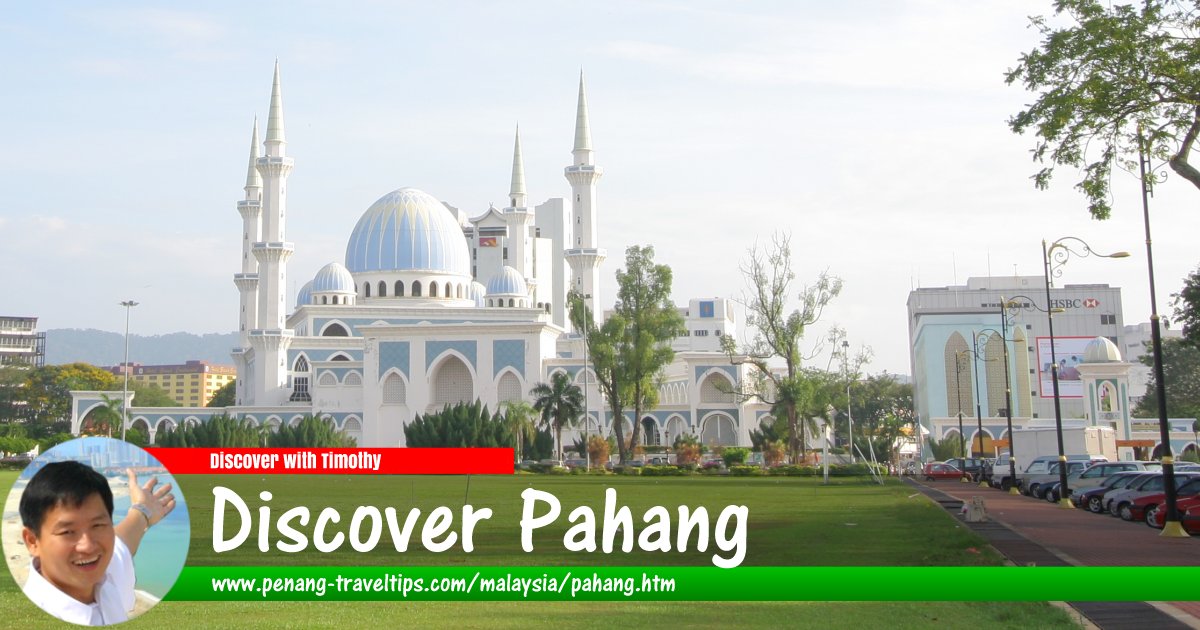 Discover Pahang (31 December, 2006)
Also available: Panduan Melawat Pahang
Pahang is a state on the eastern side of Peninsular Malaysia, bordered by Kelantan to the north, Terengganu to the northeast, Perak, Selangor, and Negeri Sembilan to the west, Johor to the south, and the South China Sea along its eastern coastline.1 Officially known as Pahang Darul Makmur, an Arabic honorific meaning "The Abode of Tranquility," the state is the third largest in Malaysia after Sarawak and Sabah, and the largest by area in Peninsular Malaysia, occupying the vast basin of the Pahang River.2 Its terrain is dominated by the Titiwangsa mountain range running along its western edge, dense tropical rainforest covering much of its interior, and a long stretch of eastern coastline facing the South China Sea, giving Pahang one of the most geographically varied profiles of any Malaysian state.1 Home to Kuantan, its state capital, and Pekan, its royal seat, Pahang blends a centuries-old Malay sultanate, some of the peninsula's best-known hill resorts, and Malaysia's oldest national park into a single, sprawling state.
Geography and Climate
Pahang's landscape can be broadly divided into three zones: the highlands along its western border, formed by the Titiwangsa mountain range that separates it from Perak and Selangor; a vast interior of lowland tropical rainforest drained by the Pahang River and its tributaries; and a coastal plain running along the South China Sea in the east.3 The Pahang River, the longest river in Peninsular Malaysia, flows through the heart of the state and has historically served as both a transport corridor and a source of livelihood for riverine communities.1 The state's highland areas, particularly Cameron Highlands and Genting Highlands, sit at elevations high enough to produce noticeably cooler temperatures than the tropical lowlands, making them popular retreats from Malaysia's typical heat and humidity.4
As with the rest of Peninsular Malaysia, Pahang experiences a tropical rainforest climate, with warm, humid conditions in the lowlands year-round, while the Northeast Monsoon between November and March brings heavier rainfall to the state's eastern coastal districts, occasionally resulting in significant flooding along the Pahang River basin.3
History
Early Kingdoms and the Malacca Sultanate
Pahang's early history is closely tied to the maritime trading networks of the Malay world. Chinese chronicles from as early as the thirteenth century record Pahang as subject to the Sumatran kingdom of Srivijaya, and the discovery of tin and gold deposits around the Tembeling River during the eighth and ninth centuries drew mining settlements and traders into the region.5 Ming dynasty records further document several tribute missions between Pahang and the Chinese imperial court during the fourteenth and fifteenth centuries, including visits connected to the celebrated admiral Zheng He.6 Following the rise of the Malacca Sultanate in the fifteenth century, Pahang was conquered around 1454 under Sultan Mansur Shah and became a vassal state, with Muhammad Shah, a son of Mansur Shah, installed as its first sultan around 1470.7
Johor Rule and the Bendahara Dynasty
After the fall of Malacca to the Portuguese in 1511, Pahang came under the influence of the Johor Sultanate, and control of the state became a frequent point of contention among regional powers, including the Portuguese, the Dutch, and the Acehnese Sultanate, throughout the sixteenth to eighteenth centuries.1 Toward the end of the eighteenth century, the Bendahara dynasty, originally administrators serving under Johor, began asserting greater autonomy, and by 1853, under the leadership of Tun Ali, Pahang formally declared independence from Johor and established itself as a sovereign sultanate.8
Civil War and British Protection
Pahang's path to stable sultanate rule was not smooth. Between 1858 and 1863, the state was consumed by a civil war between two sons of the reigning sultan, a conflict that ended with Wan Ahmad proclaimed the new sultan.8 In 1887, Pahang accepted British protection, and while the sultan formally retained his title, day-to-day administration was placed increasingly under the direction of a British Resident.9 This period also saw notable resistance movements against British encroachment, and in 1895, Pahang joined Perak, Selangor, and Negeri Sembilan to form the Federated Malay States, consolidating British administrative control over the state's mining and trade interests.2
Independence and Statehood
Pahang, along with the other Federated Malay States, joined the Federation of Malaya in 1948, and became one of its constituent states upon independence, with the declaration of independence formally taking effect on 31 August 1957.9 The state subsequently became one of the thirteen states of Malaysia following the formation of the federation in 1963, retaining its hereditary sultanate as head of state within Malaysia's constitutional monarchy system.9
Government and Administration
Pahang is a constitutional monarchy headed by the Sultan of Pahang, currently Al-Sultan Abdullah Ri'ayatuddin Al-Mustafa Billah Shah, who proclaimed his accession on 15 January 2019 following his father's abdication.10 Sultan Abdullah also served as Malaysia's 16th Yang di-Pertuan Agong, the country's federal head of state, from January 2019 to January 2024, before returning to his role as Pahang's reigning sultan.10 Executive government is led by the Menteri Besar, the state's chief minister, a position currently held by Dato' Sri Diraja Wan Rosdy Wan Ismail, who governs together with the Pahang State Executive Council and reports to the Pahang State Legislative Assembly.11
Administratively, Pahang is divided into eleven districts: Bera, Bentong, Cameron Highlands, Jerantut, Kuantan, Lipis, Maran, Pekan, Raub, Rompin, and Temerloh.2 Kuantan serves as the state capital and largest city, while Pekan, further south along the coast, remains the traditional royal seat and the location of the Sultan's official palace.2 Jerantut, the largest district by land area, functions as the principal gateway to Taman Negara, the state's most famous natural landmark.2
Economy
Manufacturing and Industrial Development
Pahang's modern economy has diversified considerably beyond its historical reliance on tin, gold, and agriculture. Manufacturing now represents the largest contributor to the state's investment inflows, anchored by major industrial parks including the Malaysia-China Kuantan Industrial Park, the Gambang Halal Park, the Pekan Automotive Park, and the Kuantan Integrated Biopark, which together have attracted billions of ringgit in domestic and foreign investment in recent years.12 The ongoing expansion of Kuantan Port has further reinforced the state's position as a logistics and trade hub along Malaysia's east coast, complementing its role within the broader East Coast Economic Region development framework.12
Tourism
Tourism forms one of Pahang's most significant economic pillars, drawing on the state's exceptionally varied landscape, from the cool tea-growing hills of Cameron Highlands to Malaysia's only legal casino resort at Genting Highlands, alongside Taman Negara's ancient rainforest and the beaches and islands along its eastern coast.4 Government development efforts, particularly in the western district cluster known as Pahang Barat, comprising Bentong, Cameron Highlands, Raub, and Lipis, have increasingly focused on leveraging the region's proximity to the Klang Valley to expand high-value agro-tourism alongside traditional hill resort attractions.13
Oil, Gas, and Petrochemicals
Pahang's coastal industrial zones, particularly around Gebeng near Kuantan, host a significant concentration of oil, gas, and petrochemical activity, which together with tourism ranks among the state's largest contributors to its overall economic growth after manufacturing.12 Agriculture, particularly oil palm cultivation across the state's vast interior, continues to support large rural populations and remains an important, if less dominant, pillar of the state economy compared to its rubber-growing past.
Demographics and Culture
Pahang is the ninth most populous state in Malaysia, with a population composed predominantly of Bumiputera, who made up roughly 81 percent of residents as of the 2020 census, followed by significant Chinese and Indian communities, alongside smaller populations of other ethnicities.2 The state is also home to several Orang Asli indigenous communities, including the Semai, Semelai, Temiar, and Jah Hut peoples, whose languages are officially recognised as regional languages of the state alongside Pahang Malay and Terengganu Malay dialects spoken in different parts of the state.2
Islam is the official religion and the majority faith, practised by roughly three-quarters of the population, while Buddhism, Hinduism, Christianity, and other faiths are practised by the state's Chinese, Indian, and other minority communities.2 This diversity is reflected in Pahang's calendar of festivals, spanning Hari Raya Aidilfitri and Aidiladha, Chinese New Year, Deepavali, and Christmas, alongside royal and state observances tied to the Sultan and the Pahang state government.
Pahang holds particular significance within Malaysia for the size and diversity of its Orang Asli population, the indigenous peoples of Peninsular Malaysia, who remain concentrated in the state's forested interior districts such as Jerantut, Lipis, and Raub.2 Communities such as the Semai, Semelai, Temiar, and Jah Hut maintain distinct languages, customs, and, in many cases, semi-traditional livelihoods tied to the surrounding forest, even as increasing numbers have moved into settled agricultural or wage-based work in recent decades. Their continued presence in the state's interior has made Pahang an important focus for national policy discussions around indigenous land rights, forest conservation, and rural development, particularly as logging, plantation expansion, and infrastructure projects have increasingly encroached on traditionally Orang Asli-inhabited land.
Districts and Major Towns
Pahang's eleven districts range from the industrialised coastal hub of Kuantan to the cool, agriculturally rich hills of the interior.
- Kuantan — the state capital and largest urban centre, home to the state's administrative offices, industrial parks, and Kuantan Port.2
- Pekan — the traditional royal town and seat of the Sultan of Pahang, located along the coast south of Kuantan.2
- Cameron Highlands — a highland district famed for its tea plantations, strawberry farms, and cooler climate, historically Malaysia's premier hill station.4
- Jerantut — the largest district by land area, functioning as the main gateway to Taman Negara.2
- Bentong — a district known for its durian orchards and proximity to Genting Highlands.13
- Temerloh — a central district town known as a transport hub along the Pahang River.8
- Raub and Lipis — historic gold-mining districts in the state's western hills.13
- Maran, Bera, and Rompin — largely rural districts associated with oil palm cultivation and Felda land settlement schemes.14
Tourism and Attractions
Pahang's sheer size and geographic variety give it one of the most diverse attraction profiles of any Malaysian state, spanning cool highland retreats, ancient rainforest, and tropical coastline.4
Highlands
- Cameron Highlands — Malaysia's best-known hill station, celebrated for its tea plantations, strawberry farms, and cool climate, developed originally as a British colonial retreat.4
- Genting Highlands — a large-scale entertainment resort offering Malaysia's only legal casino alongside theme parks and hotels, often referred to as "Malaysia's playground."3
- Fraser's Hill — a quieter, smaller hill resort known for its colonial-era bungalows and bird-watching opportunities.3
Nature and Rainforest
- Taman Negara — Malaysia's first and most famous national park, home to some of the world's oldest tropical rainforest and a wide range of wildlife, accessible primarily through Jerantut district.1
- Tasik Chini — a legendary lake system surrounded by folklore and a biosphere reserve known for its seasonal lotus blooms.3
Coast and Islands
- Tioman Island — a popular island destination off Pahang's southeastern coast, known for its beaches, diving, and rainforest-covered interior.3
- Kuantan beaches — including Teluk Cempedak, a well-known stretch of coastline close to the state capital popular with both local and international visitors.
Royal and Cultural Heritage
Pekan, the royal town, houses the official palace of the Sultan of Pahang along with several museums documenting the state's royal and cultural history, offering visitors insight into the enduring Bendahara dynasty that has ruled the state in one form or another since the eighteenth century.8
Connectivity
Pahang is well connected to the rest of Peninsular Malaysia through an extensive road network, with the East Coast Expressway linking the state to Kuala Lumpur and Terengganu.3 Rail services operated by Keretapi Tanah Melayu connect several towns within the state, including Mentakab, while Sultan Ahmad Shah Airport in Kuantan provides domestic air links to other parts of Malaysia.3 Intercity buses departing from Kuala Lumpur and other major cities also service Kuantan and other Pahang towns regularly, making the state broadly accessible for both business and leisure travellers.3
Education
Pahang hosts a growing number of higher education institutions, anchored by Universiti Malaysia Pahang, a public technical university with campuses in Kuantan and Pekan that has become a significant centre for engineering and applied sciences education in the East Coast region.12 Kuantan, as the state capital, also serves as home to several branch campuses of national and private universities, alongside a broad network of public schools spread across the state's eleven districts, many of which serve the sizeable Orang Asli and rural Malay communities scattered throughout Pahang's interior.
Natural Heritage and Conservation
Beyond Taman Negara, Pahang plays a significant role in Malaysia's broader conservation efforts, given the sheer scale of rainforest still covering much of its interior. The state's portion of the Titiwangsa mountain range forms part of the Central Forest Spine, a national ecological corridor intended to connect fragmented forest areas across Peninsular Malaysia and support the movement of wide-ranging species such as the Malayan tiger and Asian elephant.1 Tasik Chini, in addition to its cultural significance, has been recognised by UNESCO as a biosphere reserve, reflecting both its ecological value and the need to balance conservation with the tourism and agricultural development taking place around it.3
Notable Events and Royal Life
As the seat of one of Malaysia's oldest continuously ruling sultanates, Pahang's royal calendar, particularly events tied to the Sultan's birthday and state ceremonial occasions, forms an important part of civic life in Pekan and Kuantan each year.10 Sultan Abdullah's own biography, including his term as Malaysia's federal Yang di-Pertuan Agong between 2019 and 2024 and his long-standing involvement in football administration at both national and regional levels, has further raised the profile of the Pahang royal institution beyond the state's own borders in recent years.10 Kuantan and the wider state also host a range of sporting and cultural events throughout the year, from state-level football competitions to festivals celebrating the durian harvest in districts such as Bentong and Raub, both renowned for their orchards.
Cuisine
Pahang's cuisine reflects its position as an east coast Malaysian state, sharing culinary traditions with neighbouring Terengganu and Kelantan while retaining its own distinct specialities. Freshwater fish dishes drawn from the Pahang River basin, along with dishes like gulai tempoyak, a sour and pungent curry made with fermented durian, and ikan patin masak tempoyak, a river catfish dish cooked in the same fermented durian base, are considered signature specialities of the state's interior communities.15 Along the coast, fresh seafood dominates, while the highland districts of Cameron Highlands and Bentong contribute produce not commonly grown elsewhere in Malaysia, including strawberries, temperate vegetables, and prized Musang King durian.
Healthcare
Healthcare provision in Pahang is centred around Kuantan, home to Sultan Ahmad Shah Medical Centre, a major teaching hospital affiliated with Universiti Malaysia Pahang, alongside Hospital Tengku Ampuan Afzan, the state's principal public referral hospital.12 Given the state's vast size and largely rural interior, district hospitals and clinics spread across Pahang's eleven districts play a particularly important role in serving remote and Orang Asli communities, many of whom live considerable distances from the state's larger urban medical centres in Kuantan and Temerloh.
Conclusion
From its early role as a tribute-paying vassal of Srivijaya and Malacca, through the turbulence of civil war and British protection, to its status today as Peninsular Malaysia's largest and most geographically diverse state, Pahang's history reflects the resilience of a centuries-old Malay sultanate that has continuously adapted to changing regional powers. Its combination of cool highland retreats, one of the world's oldest rainforests, a long stretch of South China Sea coastline, and an expanding industrial and tourism economy gives Pahang a breadth of character matched by few other Malaysian states. Whether through a visit to the tea terraces of Cameron Highlands, the ancient forest trails of Taman Negara, or the royal town of Pekan, Pahang continues to offer both Malaysians and international visitors an unusually complete cross-section of what Peninsular Malaysia has to offer.
Map of towns in Pahang
Towns in Pahang
- Kuantan - capital (GPS: 3.81955, 103.33225)

- Pekan - royal town (GPS: 3.48395, 103.39096)

- Balok (GPS: 3.92967, 103.36555)

- Bandar Muadzam Shah (GPS: 3.05875, 103.08866)

- Bentong (GPS: 3.52301, 101.90849)

- Bukit Tinggi (GPS: 3.39673, 101.83967)

- Cameron Highlands (GPS: 4.47212, 101.38014)

- Chenor (GPS: 3.49029, 102.58535)

- Jerantut (GPS: 3.9355, 102.35755)

- Karak (GPS: 3.41301, 102.03174)

- Kuala Kenau (GPS: 3.93173, 103.04862)

- Kuala Lipis (GPS: 4.18104, 102.05371)

- Kuala Pahang (GPS: 3.53329, 103.46065)

- Kuala Rompin (GPS: 2.79902, 103.49258)

- Mentakab (GPS: 3.4824, 102.34828)

- Panching (GPS: 3.89688, 103.1417)

- Raub (GPS: 3.80259, 101.85287)

- Sungai Lembing (GPS: 3.91426, 103.03012)

- Temerloh (GPS: 3.45105, 102.41987)

Major Hill Resorts in Pahang
- Cameron Highlands (GPS: 4.47212, 101.38014)
- Genting Highlands (GPS: 3.42377, 101.79204)
Categories of sights in Pahang
- TOWNS IN PAHANG
- Apartments in Pahang
- Army Camps in Pahang
- Banks in Pahang
- Bridges in Pahang
- Bus Terminals in Pahang
- Cemeteries in Pahang
- Chinese Temples in Pahang
- Churches in Pahang
- Clan Associations in Pahang
- Clinics in Pahang
- Clocktowers in Pahang
- Commercial Properties in Pahang
- Convention Centres in Pahang
- Fire Stations in Pahang
- Forest Parks in Pahang
- Golf Courses in Pahang
- Government Buildings in Pahang
- Gurdwaras in Pahang
- Hawker Centres in Pahang
- Hills in Pahang
- Hill Resorts in Pahang
- Hindu Temples in Pahang
- Hospitals in Pahang
- Hotels in Pahang
- Housing Estates in Pahang
- Libraries in Pahang
- Markets in Pahang
- Mini Markets in Pahang
- Mosques in Pahang
- Mountains in Pahang
- Museums in Pahang
- Night Markets in Pahang
- Parks in Pahang
- Petrol Stations in Pahang
- Playing Fields in Pahang
- Police Stations in Pahang
- Post Offices in Pahang
- Rest Houses in Pahang
- Restaurants in Pahang
- Rivers in Pahang
- Schools in Pahang
- Shopping Malls in Pahang
- Stationery Shops in Pahang
- Streets in Pahang
- Supermarkets in Pahang
- Suraus in Pahang
- Villages in Pahang
- Waterfalls in Pahang
Map of Places of Interest in Pahang
Other places of interest in Pahang
- Cameron Highlands (GPS: 4.47212, 101.38014)
- Fraser's Hill (GPS: 3.71186, 101.73654)
- Genting Highlands (GPS: 3.42377, 101.79204)
- Gunung Senyum (GPS: 3.70681, 102.43375)
- Gunung Tapis Park
- Kenong Rimba Park
- Kota Gelanggi (GPS: 3.91846, 102.59504)
- Krau Wildlife Reserve
- Kuala Gandah Elephant Sanctuary (GPS: 3.59229, 102.14501)
- Pulau Tioman (GPS: 2.79024, 104.16984)
- Rompin & Lanjut Beach
- Taman Negara (GPS: 4.38309, 102.40173)
- Tasik Bera (GPS: 3.81666, 102.41666)
- Tasik Chini (GPS: 3.43054, 102.91045)
- Teluk Cempedak (GPS: 3.8126, 103.372)
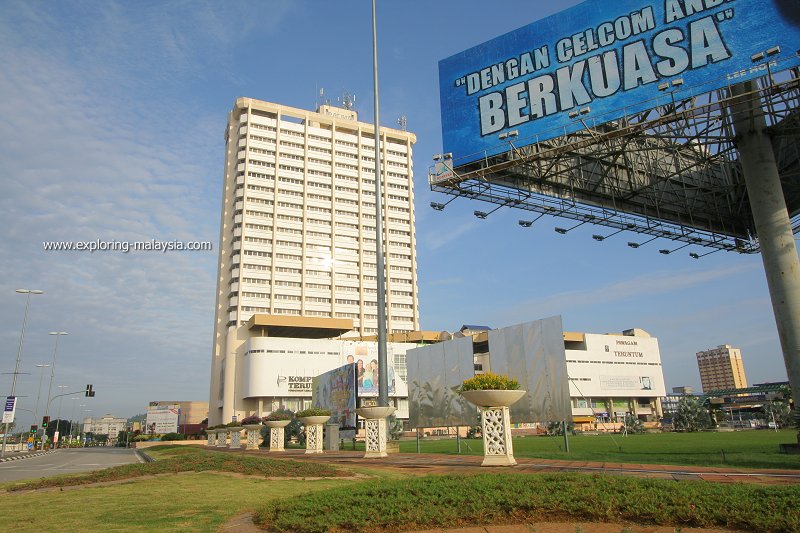
Kuantan (31 December 2006)
References
- Wikipedia. "Pahang."
- Wikipedia. "Pahang: Demographics and Administration."
- Visitor Malaysia. "Pahang."
- Malaysia.com. "Pahang State."
- A Stamp A Day. "Pahang [State of Malaysia] #118 (1986)."
- A Stamp A Day. "Pahang: Ming Dynasty Tribute Missions."
- Grokipedia. "Pahang Sultanate."
- Pekan Classics. "History of Pahang."
- Britannica. "Pahang: History, Nature & Industry."
- Grokipedia. "Sultan of Pahang."
- Wikipedia. "Mohd Sharkar Shamsudin: Pahang State Government."
- Malaysian Business. "Pahang Attracts RM56.4 Billion In Investments."
- ECERDC. "Pahang Barat To Be The Focus Of New Economic Growth In Pahang."
- Wikipedia. "Maran (town)."
- Tourism Pahang. "Latest News."
Page Details
This page was created on 23 July 2026. Hi, my name is Timothy and created it from my research, for my own entertainment, knowledge and to satisfy my curiosity. I am providing the information to you in good faith and hope it is useful. I try to get the details as accurate as possible. I also try to update the page whenever I stumble on new details. So this and all my other pages are perpetual work in progress. If you discover any error, please politely inform me, pointing out where the error lies, and I will correct it as soon as possible. Your helpfulness will keep this page accurate, relevant and helpful to those who need the information.My Videos of Malaysia
 Latest Pages & Updates
Buy Me A Coffee
If you enjoy the information I provide and want to support the work I do, please buy me a coffee! I appreciate it immensely, thank you so much!
